How can you tell if a shirt is genuinely Egyptian cotton?
News
Somewhere along the way, thread count became the number men use to decide whether a shirt is good. It is easy to compare, it sounds technical, and higher obviously means better. Except that shirt thread count was never really a shirting measurement at all — it came from bedding, it can be inflated legitimately enough that nobody has to lie, and the metric that actually tells you about a shirt is one most buyers have never heard of.
Thread count measures how many threads are packed into a square inch. In shirting, the more meaningful figure is yarn count — how fine the yarn itself is, written as 80s, 100s, 120s and upward. Finer yarn requires longer fibre, which is why yarn count tells you something about quality and thread count often does not.
Judge the cloth, not the number — see the Tarrit Egyptian Cotton collection.
Key Takeaways
- Thread count is a bedding metric that migrated into shirting marketing.
- Yarn count vs thread count: yarn count measures fineness, thread count measures density.
- Multi-ply yarns let a fabric advertise a much bigger number honestly.
- There is a physical ceiling to how many threads fit in an inch.
- Fibre length is the property underneath all of it.
What Thread Count Actually Counts
The definition is simpler than the mystique around it. Thread count is the number of threads in one square inch of fabric — the vertical ones running the length of the cloth, plus the horizontal ones running across it, added together. A fabric with 100 vertical and 100 horizontal threads per inch is a 200 thread count fabric. That is the whole of it.
Notice what that measures: density. How tightly packed the weave is. It says nothing at all about what those threads are made of, how long the fibres inside them are, or how well they were spun. Two fabrics with identical thread counts can be completely different cloths — one fine and smooth, the other coarse and prone to pilling — because thread count meaning fabric quality was always an assumption rather than a fact. The number describes construction, not material.
How a Bedding Metric Ended Up on Shirts
Thread count became famous through bed linen, where it genuinely does carry some information about how a sheet feels. It also became a marketing arms race — brands competed on the number, the number climbed, and consumers learned to read it as a quality score.
Then it migrated. Once buyers were trained to look for a big number, it made commercial sense to put one on anything woven, including shirts. But shirting had its own established measurement, used by mills for well over a century, and it was never thread count. So high thread count shirts became a category that exists mainly because customers recognise the phrase — not because anyone in a mill uses it to describe good shirting cloth. The number was imported to sell, not to inform.
The Number That Actually Matters: Yarn Count
Yarn count measures the fineness of the yarn itself, and in shirting it is written as a number followed by an "s" — 80s, 100s, 120s, 140s and upward. Counterintuitively, a higher number means a finer, thinner yarn, because the measurement is based on how much length you get from a fixed weight of cotton. More length from the same weight means thinner yarn.
Here is why this is the useful metric: you cannot spin very fine yarn from short fibres. Short-staple cotton simply will not hold together when drawn out that thin. So a high yarn count is not a claim a mill can make loosely — it is physical evidence that long-staple fibre was used, because nothing else could have produced it. Yarn count is therefore a proxy for fibre quality in a way that thread count never is. You may also see counts written as "two-fold" or "2-ply", meaning two fine yarns twisted together for strength and smoothness, which is standard in good shirting.
Why Big Thread Count Numbers Are Easy to Reach
This is the part worth understanding, because it explains why cheap shirts advertise high thread count without anyone technically lying.
If you twist several thin strands together into one yarn and then weave with it, you can count each strand individually rather than counting the finished yarn. A fabric with 300 actual threads per square inch, woven from four-ply yarn, can be described as having a thread count of 1200. Nothing false has been stated. But the cloth is not four times better than a 300 count fabric — it may well be worse, because splitting yarn into multiple weaker plies is not a mark of quality. Industry bodies have pushed back on this practice for years, and it is precisely why very high advertised numbers should increase your suspicion rather than your confidence.
There is also a hard physical limit. Only so many threads of a given thickness fit into an inch of cloth. Beyond a certain point, the only way the number climbs is through counting conventions or thinner, weaker yarn — and past that, packing more threads in makes fabric denser and less breathable, which for a shirt worn in Indian heat is a downgrade rather than an upgrade.
Thread Count vs Yarn Count
| Thread count | Yarn count | |
|---|---|---|
| What it measures | Threads per square inch | Fineness of the yarn |
| Written as | 200, 400, 800 | 80s, 100s, 120s, 140s |
| Tells you about fibre? | No | Yes — fine yarn needs long fibre |
| Can it be inflated? | Yes, via ply counting | Much harder — it's physical |
| Used by mills | Mainly for bedding | Standard in shirting |
Questions Men Ask About the Number
What thread count should a good shirt be?
What thread count should a good shirt be is a question without a useful answer, which is itself the answer. Good shirting is described in yarn counts, and most quality shirts sit somewhere from 80s upward, with finer counts reserved for lighter, dressier cloth.
Is higher thread count always better in a shirt?
No. Is higher thread count always better in a shirt — beyond a point, more threads means a denser, heavier, less breathable fabric. In Indian heat, that is the wrong direction to move in.
Does thread count matter in cotton shirts?
Does thread count matter in cotton shirts — marginally, as a rough indicator of weave density. It is far less informative than yarn count, fibre length or weave type, and should not be the deciding factor.
What if a brand doesn't publish either number?
Common, and not automatically a bad sign. Judge the cloth in hand instead — surface smoothness, low fuzz, drape and weight will tell you more than any figure.
What to Judge Instead
Six things, in order of how much they actually matter.
- Fibre length. Extra-long-staple cotton is the property underneath everything else — smoothness, pilling resistance, colour retention and how the cloth ages all trace back to it.
- Yarn count. If a brand publishes it, take it seriously. It is hard to fake because fine yarn physically requires long fibre.
- Surface under light. Hold the fabric at an angle to a light source and look across it. A haze of fibre standing up from the weave means short staple.
- Drape, not softness. Let the fabric hang over your hand. Good cloth falls; stiff cloth holds a boxy shape. Softness alone can be a chemical finish that washes out.
- Weave type. Poplin, twill, oxford and jacquard behave completely differently regardless of any count. Match the weave to the use.
- How it looks after three washes. The only test no marketing number survives, and the one that settles everything.
Where Buyers Get Misled
The most common error is treating thread count as a quality score rather than a density measurement, which is exactly what the number was borrowed to encourage. The second is assuming higher is always better, when past a certain density a shirt simply becomes heavier and less breathable — a genuine disadvantage in Indian weather. The third is comparing thread counts across brands as though they were measured identically, when ply-counting conventions vary and two "400 count" fabrics may share nothing. The fourth is dismissing a shirt because no number is published, when most serious shirting brands describe cloth by yarn count and weave rather than advertising a headline figure. And the fifth, the one that costs real money, is buying on the number instead of on the fabric — a decision that can be made in a shop in ten seconds by hand, and which no label will ever make for you.
What We Get Asked at the Counter
In our experience, thread count comes up most often from men who have done their research, which is what makes it worth addressing properly rather than brushing aside. They arrive with a number in mind and are usually surprised to hear that mills do not describe shirting that way — that the conversation in the trade is about yarn counts, ply and staple length, and that the headline figure they have been comparing was imported from the bedding aisle. What we tell them is that the number they should trust is the one that is physically hard to fake: you cannot spin very fine yarn from short cotton, so fineness is evidence. The other thing we do is stop talking and hand the shirt over, because the hand test settles it faster than any explanation. Hold it to the light, look across the surface, let it drape over your fingers. Men who do that twice stop asking about thread count entirely. Written by the Tarrit styling team.
Two Shirts, Same Number
Imagine two shirts both advertising a thread count of 400. The first is woven from fine two-fold long-staple yarn, densely but not excessively — smooth surface, good drape, breathable, and it will soften over years without pilling. The second reaches the same figure by counting the plies of a coarser multi-ply yarn made from shorter fibre. On a website they are indistinguishable, and on a hanger they are close enough that most buyers would not separate them. In hand they are obviously different: the second has a faint haze on the surface, sits stiffer, and does not fall the same way over a wrist. Six months later the difference is not subtle at all — one has softened, the other has pilled at the underarms and lost its colour depth. Same number, different cloth, and the number was never going to tell you which was which.
Why This Keeps Happening
There is a pattern worth noticing across everything in shirting marketing, and thread count is only its clearest example. Buyers want a single comparable figure, because comparing is hard and numbers make it feel manageable. So the industry supplies one — thread count, or a country of origin, or a word like "premium" — and each of those becomes decoupled from quality precisely because it became popular enough to sell. The properties that genuinely determine how a shirt performs are unglamorous and hard to put on a swing tag: staple length, yarn fineness, ply, weave density, finishing. None of them compress into a single impressive number, which is exactly why they remain reliable. The practical conclusion is not that all numbers lie. It is that the ones easiest to compare are the ones most worth being sceptical of, and that ten seconds with the fabric in your hand outranks all of them.
Judging Cloth at Tarrit
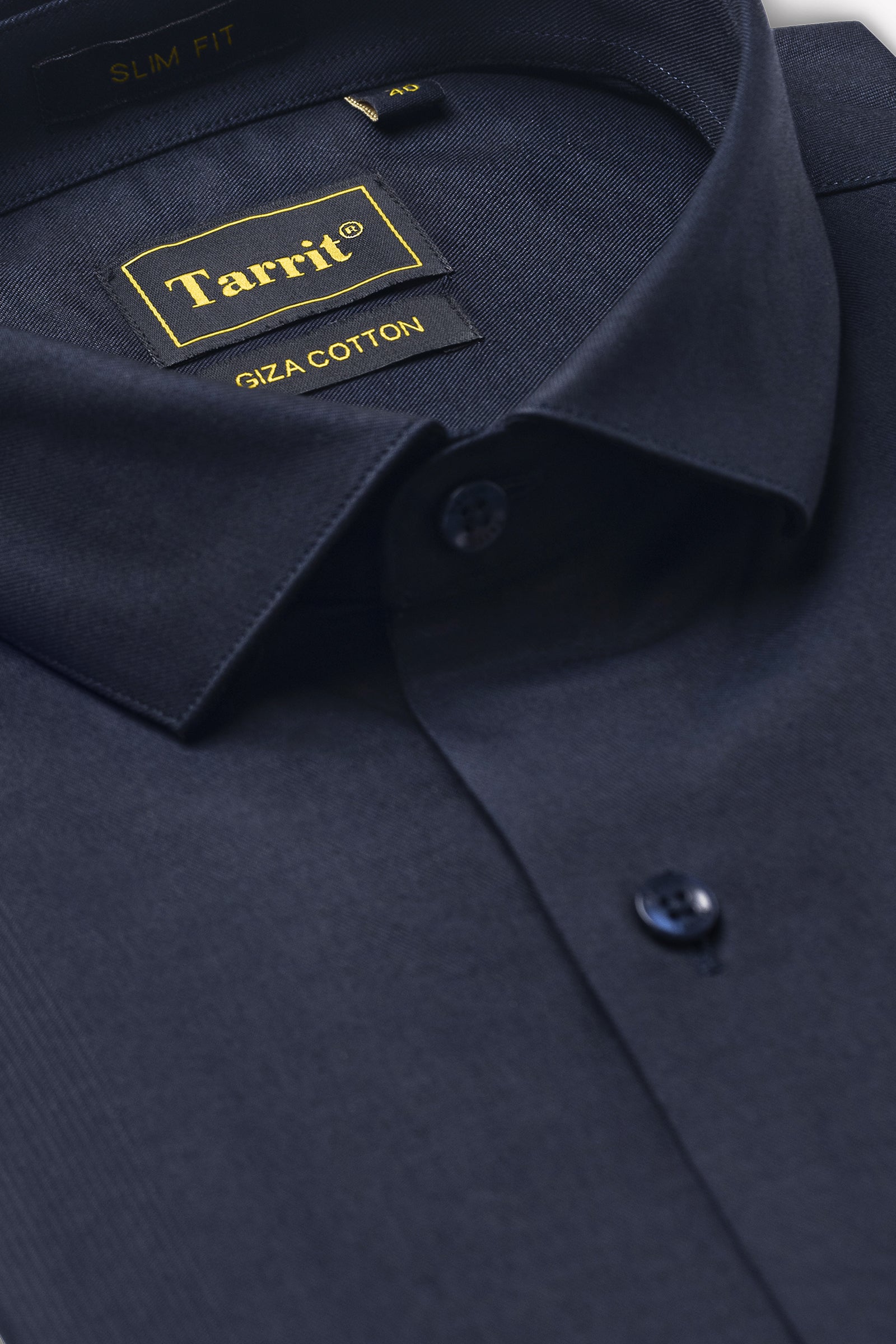
Every shirt in the Tarrit Egyptian Cotton collection is woven from extra-long-staple cotton, which is the property that finer yarn, smoother surface and pilling resistance all follow from — the reason we talk about fibre rather than headline numbers. Sizes run 38 to 44 across 34 shirts. If you want to run the hand test yourself, The Purist White Shirt is the most revealing, because white shows surface texture with nothing to hide behind. The Distinguished Shirt and The Legacy Shirt put the same cloth into daily rotation, which is where fibre quality proves itself over time. And if a brand ever quotes you a number without telling you the fibre behind it, that is the question worth asking next.
Frequently Asked Questions
What is shirt thread count?
The number of threads in one square inch of fabric — vertical and horizontal added together. It measures how densely the cloth is woven, not what the threads are made from.
What thread count should a good shirt be?
There is no reliable target, because good shirting is described in yarn counts rather than thread counts. Yarn counts of 80s and above are common in quality shirting, with finer counts used for lighter, dressier cloth.
Is higher thread count always better in a shirt?
No. Beyond a certain density, more threads make fabric heavier and less breathable, which is a disadvantage in warm climates. Very high advertised numbers often come from counting yarn plies individually.
What is the difference between thread count and yarn count?
Thread count measures how many threads are packed into a square inch. Yarn count measures how fine each yarn is. Yarn count is more informative because fine yarn can only be spun from long-staple fibre.
Why do cheap shirts advertise high thread count?
Because multi-ply yarns can be counted as multiple threads, which lets a fabric claim a much larger number without anything false being stated. The cloth is not better for it.
What determines shirt fabric quality if not thread count?
Fibre length above all, then yarn fineness, ply, weave type and finishing. These decide smoothness, breathability, pilling resistance and how the shirt ages.
Put the Number Down and Pick the Shirt Up
The most useful thing you can do with shirt thread count is stop using it as a shortcut. It measures density, it can be inflated without anyone lying, and it was borrowed from bed linen to make shirts easier to sell. The properties that matter — fibre length, yarn fineness, weave — do not compress into a headline figure, which is precisely why they stay honest. Hold the fabric to the light, let it drape over your hand, and judge the cloth. Explore the Tarrit Egyptian Cotton collection.