How Is Tencel Made, and Why Does the Closed-Loop Process Matter? | Tarrit
NewsPlenty of fabrics call themselves sustainable. Few can explain why. Tencel can — and the explanation is genuinely interesting, because it comes down to how the fibre is made rather than a marketing claim. So how is tencel made, and what makes its closed-loop process worth caring about? At Tarrit, it's the reason we call Tencel the most honest shirt you can own.
Tencel starts life as a tree and ends up as one of the softest, coolest shirt fabrics available — and the journey between the two is where its environmental credentials are earned. Understanding what is tencel made from and how it's produced is what separates a real sustainability story from greenwashing.
This guide walks through how Tencel is made, what the closed-loop process actually does, and why it makes Tencel one of the few genuinely sustainable shirt fabrics.

How is Tencel made? Tencel is made from wood pulp sourced from sustainably managed trees. The pulp is dissolved in a non-toxic solvent, then spun into fibres and hardened. The process runs in a closed loop that recovers about 99.5% of the water and solvent used, recycling them back into production. The result is Tencel lyocell — a soft, cool, biodegradable fibre.
What Is Tencel Made From?
Tencel is made from cellulose — the natural material in wood pulp — sourced from sustainably managed forests, often fast-growing trees like eucalyptus. That makes it a plant-based fibre, not a petroleum-based synthetic. But it isn't quite the same as raw cotton either: it's a "regenerated" natural fibre, meaning natural cellulose is processed into a new, refined form. This is the answer to is tencel a natural or synthetic fabric — it's plant-derived and biodegradable, processed with modern efficiency.
How Tencel Is Made: Step by Step
The production of tencel lyocell follows a clear, efficient sequence.
| Step | What Happens |
|---|---|
| 1. Sourcing | Wood harvested from sustainably managed forests |
| 2. Pulping | Wood is processed into cellulose pulp |
| 3. Dissolving | Pulp dissolved in a non-toxic solvent |
| 4. Spinning | Solution spun into fine lyocell fibres |
| 5. Recovery | ~99.5% of water and solvent recycled back in |
Why the Closed-Loop Process Matters
1. It Wastes Almost No Water
The tencel closed loop process recovers around 99.5% of the water and solvent used, so very little is discharged as waste.
2. It Uses a Non-Toxic Solvent
The solvent that dissolves the pulp is non-toxic and reused, avoiding the harsher chemicals some fibre production relies on.
3. It Starts From a Renewable Source
Wood from sustainably managed forests is renewable, unlike the fossil fuels behind synthetic fibres — central to why is tencel sustainable.
4. It Produces a Biodegradable Fibre
Because it's plant-based, Tencel is fully biodegradable at the end of its life, rather than lingering like synthetics.
5. It Delivers Performance Too
The same process yields a fibre that's soft, cool and moisture-wicking — sustainability without sacrificing comfort.
Why This Makes Tencel Genuinely Sustainable
- Renewable input — sourced from sustainably managed, fast-growing trees.
- Minimal water waste — the closed loop recovers almost all water used.
- Non-toxic processing — a reused, low-harm solvent.
- Biodegradable output — answering is tencel biodegradable with a clear yes.
- Verifiable — genuine Tencel comes from certified producers, so the claim is real.
What It Means for Your Shirt
Comfort you can feel: the process produces a fibre smoother than cotton and cooler than linen, so the sustainability comes with real performance.
A claim you can trust: because the environmental benefit is built into how it's made — answering is tencel eco friendly with substance, not slogans.
A choice you can stand behind: a shirt from a renewable source, made with minimal waste, that biodegrades at the end of its life.
Tencel Sustainability Quick Guide
| Question | Answer |
|---|---|
| Made from? | Sustainably sourced wood pulp |
| Natural or synthetic? | Plant-based (regenerated natural) |
| Water use? | ~99.5% recovered in a closed loop |
| Solvent? | Non-toxic, reused |
| Biodegradable? | Yes, fully |
Conclusion
So how is Tencel made, and why does the closed-loop process matter? It's spun from sustainably sourced wood pulp, dissolved in a non-toxic solvent, and produced in a system that recovers around 99.5% of its water — a genuinely low-waste way to make a fibre. That process is exactly why tencel is sustainable in substance rather than slogan: renewable input, minimal waste, biodegradable output.
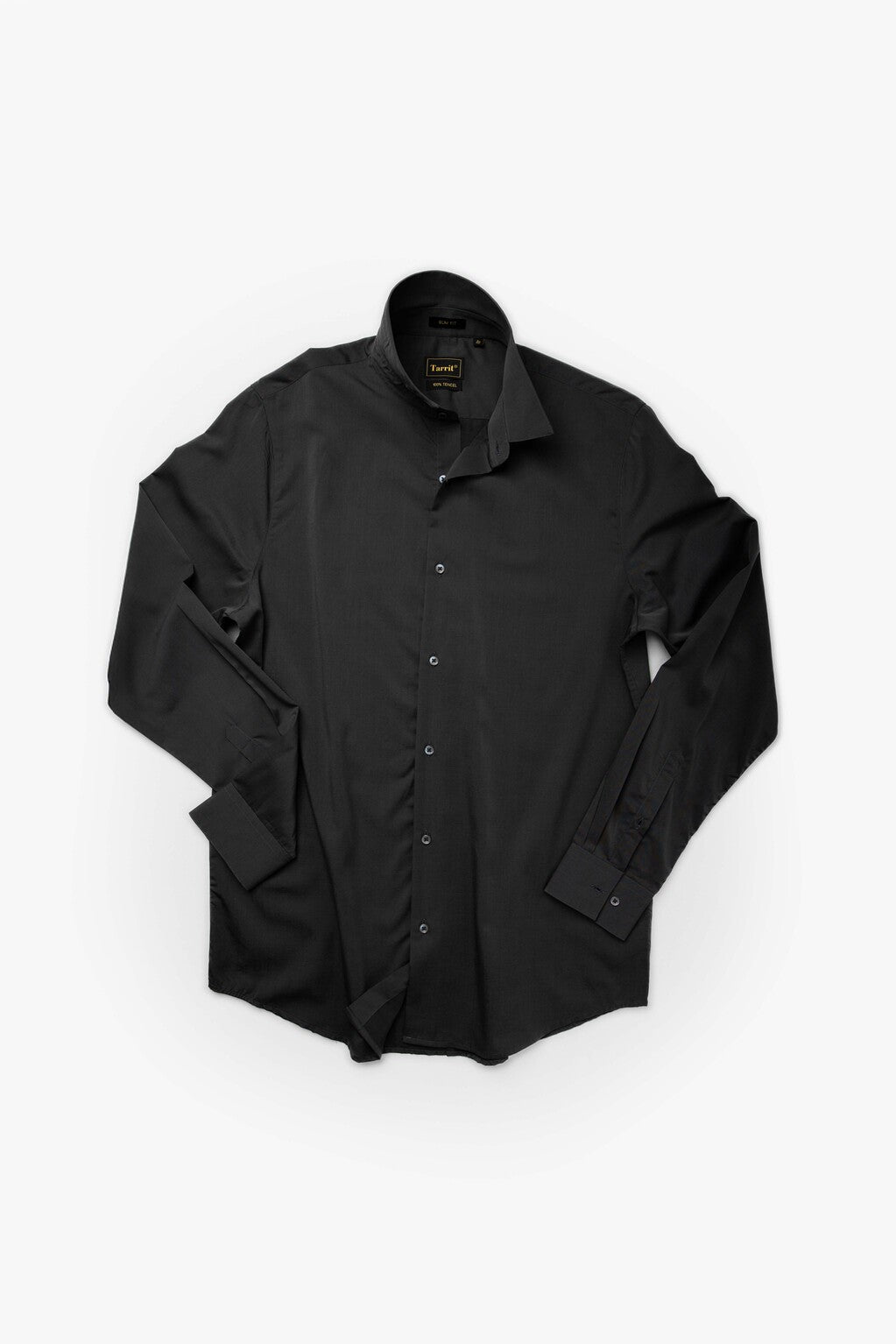
The best part is that none of it costs you comfort — the same fibre is soft, cool and moisture-wicking. A Tarrit Tencel shirt is made from exactly this: a fabric that's kind to wear and honest in how it's made.
Frequently Asked Questions
How is Tencel made?
Tencel is made from sustainably sourced wood pulp, dissolved in a non-toxic solvent and spun into lyocell fibres, in a closed-loop process that recovers about 99.5% of the water and solvent used.
What is Tencel made from?
From cellulose in wood pulp, sourced from sustainably managed forests — often fast-growing trees such as eucalyptus — making it a plant-based fibre.
Is Tencel natural or synthetic?
It's a plant-based, regenerated natural fibre — derived from wood cellulose and biodegradable, unlike petroleum-based synthetics.
Is Tencel sustainable and eco-friendly?
Yes. It comes from renewable, sustainably managed forests and is made in a closed-loop process that recovers around 99.5% of its water, with a non-toxic, reused solvent.
Is Tencel biodegradable?
Yes. Because it's a plant-based cellulose fibre, Tencel is fully biodegradable at the end of its life.