


An Indian wedding rarely fits into a single day. Between the engagement, mehndi, sangeet, the main ceremony and the reception, the real question every groom faces is practical: how many shirts does a groom need for a wedding that runs across several functions? Plan it right and every look feels considered; plan it wrong and you're repeating shirts or scrambling the night before. At Tarrit, it's one of the first things we help grooms map out.
The simple principle is one shirt per major function — but the exact number depends on how many ceremonies you're hosting and which you'll be photographed in most. A clear groom wedding wardrobe checklist turns a stressful guessing game into a short, confident list.
This guide breaks down how many shirts you actually need, which function calls for what, and how to plan your wedding wardrobe as a groom so every ceremony is covered without over-buying.
How many shirts does a groom need for a multi-day Indian wedding? Plan roughly one shirt per major function — typically 4 to 6 across a full multi-day wedding (engagement, mehndi/sangeet, main ceremony and reception), plus one spare. Fewer for a compact two-day wedding, more for an elaborate celebration with additional events.
The Simple Rule: One Shirt Per Function
The easiest way to answer how many outfits for an Indian wedding groom is to count the functions you'll be the centre of, and plan one distinct shirt for each. This keeps every look fresh in photographs and avoids the awkwardness of repeating the same shirt across events that are all documented. Add one spare for comfort — an extra shirt for a long day, a backup in case of spills or heat. That's the whole logic behind the number.
How Many Shirts by Wedding Length
Here's how the shirts needed for a multi-day wedding scale with the size of the celebration.
| Wedding Length | Functions | Shirts Needed |
|---|---|---|
| Compact (2 days) | Ceremony + reception | 2–3 shirts |
| Standard (3 days) | Mehndi/sangeet, ceremony, reception | 3–4 shirts |
| Full (4–5 days) | Engagement, mehndi, sangeet, ceremony, reception | 5–6 shirts |
| Elaborate | Above + extra events/pre-wedding shoot | 6–8 shirts |
What to Wear for Each Function
1. Engagement
A refined pastel or soft neutral shirt — polished but relaxed, setting the tone before the main events.
2. Mehndi / Haldi
Something light, breathable and forgiving — a daytime function where you'll move a lot, so comfort and easy colours win.
3. Sangeet
A livelier shirt with a little texture or richer colour — the celebration function where you can be more expressive.
4. Main Ceremony
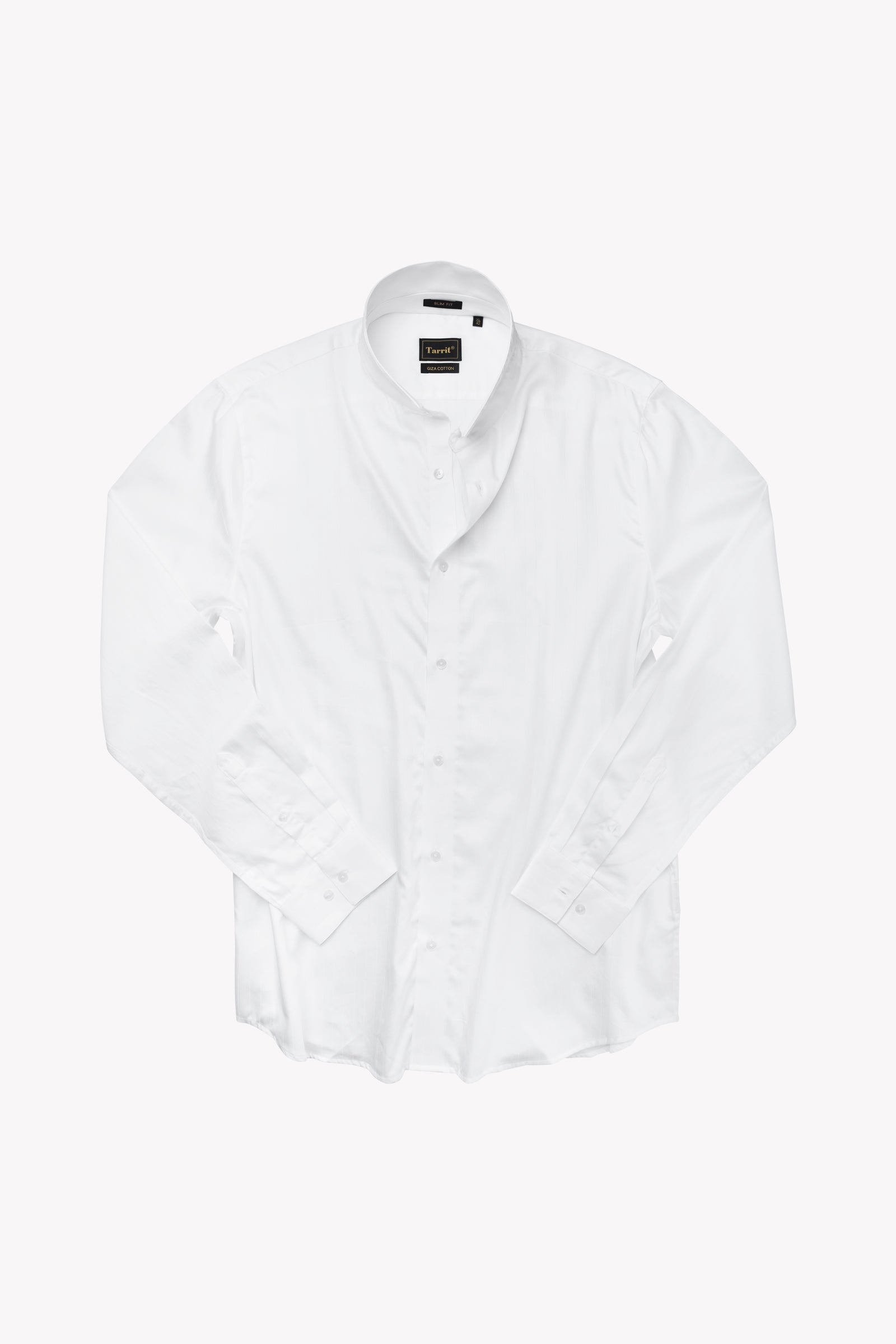
Your sharpest, most formal shirt — usually crisp white or ivory in a premium fabric that photographs flawlessly all day.
5. Reception
An evening shirt in a deeper tone or subtle sheen — the most polished look for the most photographed party.
How to Plan Your Wedding Shirt Wardrobe
- List every function — write down each event you'll be central to; that number is your baseline.
- Assign a colour and fabric — match each shirt to the ceremony's time, setting and formality.
- Add one spare — a backup for long days, heat or the unexpected.
- Avoid repeats in photos — a distinct shirt per documented event keeps every look fresh.
- Plan early — decide the full set together so colours and fabrics flow as one wardrobe.
Planning for Fabric and Comfort
Match fabric to the function: breathable Giza cotton or linen for hot daytime events, finer cotton or Tencel for the evening — planning the groom dress code for each ceremony around comfort as much as colour.
Think about the calendar: back-to-back functions mean you want shirts that stay crisp and comfortable for hours, not ones that wilt by mid-afternoon.
Order with time to spare: plan the wardrobe 3–6 weeks ahead so there's room for fittings, adjustments or made to measure where you want a precise fit.
Groom's Wedding Shirt Checklist
| Function | Shirt to Plan |
|---|---|
| Engagement | Refined pastel or soft neutral |
| Mehndi / Haldi | Light, breathable, easy colour |
| Sangeet | Textured or richer colour |
| Main ceremony | Crisp white/ivory, premium fabric |
| Reception | Deep tone or subtle sheen (+1 spare) |
Conclusion
So how many shirts does a groom need for a multi-day Indian wedding? Plan roughly one per major function — usually 4 to 6 across a full celebration, plus a spare — with fewer for a compact wedding and more for an elaborate one. Count your functions first, and the number answers itself.
The real trick is planning the set as one wardrobe, so colours and fabrics flow from function to function and every look feels considered. A little planning — or a guided Tarrit consultation — means every ceremony is covered without over-buying, and you look sharp from the first day to the last.
Frequently Asked Questions
How many shirts does a groom need for a multi-day Indian wedding?
Roughly one per major function — typically 4 to 6 across a full wedding (engagement, mehndi/sangeet, ceremony and reception), plus a spare. Fewer for a compact wedding, more for an elaborate one.
How many shirts for a 3-day wedding?
Usually 3 to 4 — one each for the mehndi or sangeet, the main ceremony and the reception, with an optional spare for comfort.
Can a groom repeat a shirt across functions?
It's best avoided for photographed events, since each function is documented. A distinct shirt per event keeps every look fresh; a spare can be reused for informal moments.
What should a groom wear for each wedding function?
Pastels or neutrals for the engagement, light breathable shirts for mehndi/haldi, richer tones for sangeet, crisp white or ivory for the ceremony, and deeper tones for the reception.
How far in advance should a groom plan his wedding shirts?
Around 3–6 weeks ahead, allowing time for selection, fittings, adjustments or made to measure where a precise fit is wanted.