Is Tencel a genuinely premium fabric or just marketing?
News
"Sustainable" is the most abused word in clothing. It is stamped on products that have changed nothing but their packaging, attached to claims nobody verifies, and used to justify prices with no basis beyond a green label. So when a fabric like Tencel is sold as the sustainable choice, healthy scepticism is the correct response. If you are asking is Tencel sustainable or whether it is another eco buzzword, this is the honest examination — what the claim rests on, where it genuinely holds up, and where it deserves the caution you are bringing to it.
Tencel's sustainability claim is stronger than most, because it rests on specific, verifiable process facts rather than vague assertions — a closed-loop system that recovers most of its water and solvent, wood from managed forests, and full biodegradability. It is not perfect or impact-free, but it is a genuine improvement, not greenwashing.
Sustainability you can actually trace — see the Tarrit Tencel collection.
Key Takeaways
- Tencel's claims are specific and verifiable, which is what separates them from greenwashing.
- What makes Tencel eco friendly: a closed-loop process that recovers most water and solvent.
- The wood comes from sustainably managed, fast-growing forests needing little water.
- It is fully biodegradable, unlike petroleum-based synthetics.
- It is a real improvement, not impact-free — honesty requires saying both.
What Greenwashing Actually Looks Like
To judge whether Tencel is the real thing, it helps to know what the fake version looks like — because once you can spot greenwashing, Tencel's claims read very differently. Greenwashing relies on vagueness. It uses words with no fixed meaning — "eco," "green," "natural," "conscious" — attached to no specific, checkable fact. It highlights one minor green feature while ignoring a larger footprint. It implies benefits without measuring them, and it never invites verification because verification is exactly what it cannot survive.
The test for any sustainability claim, then, is specificity. Does it name a process, a number, a certifiable fact you could check? Or does it just make you feel better? This is the lens to apply to Tencel, and it is a demanding one. So is Tencel actually sustainable comes down to whether its claims are the specific, checkable kind or the vague, feel-good kind — and that is a question with a clear answer rather than a matter of trust.
What Tencel's Claim Actually Rests On
Tencel's sustainability case is built on three concrete, verifiable pillars — not adjectives.
A closed-loop production process
This is the strongest single pillar. Tencel is made in a closed-loop system that recovers around 99.5% of the water and organic solvent it uses, recycling them back into production rather than discharging them as waste. This is a specific, measurable claim about the manufacturing process — exactly the kind greenwashing avoids. It also directly addresses the biggest environmental problem with older wood-based fabrics like conventional viscose, whose production is far more polluting.
Responsibly sourced raw material
The wood comes from sustainably managed forests, typically fast-growing eucalyptus that needs little water and no irrigation, and grows on land not suited to food crops. Compared with conventional cotton — one of the thirstiest crops in agriculture — the raw material demands significantly fewer resources to produce. This is central to is Tencel better for the environment than cotton: on water use specifically, the gap is real.
Full biodegradability
Because Tencel is cellulose derived from wood, it biodegrades — it breaks down in soil the way a natural fibre does. A polyester shirt effectively never does. At the end of its life, Tencel returns to the earth rather than persisting as microplastic, which is a genuine, physical difference rather than a marketing one.
Tencel vs Other Fabrics on Sustainability
| Fabric | Resource use | Biodegradable? | Key concern |
|---|---|---|---|
| Tencel / lyocell | Low — closed loop | Yes | Still an industrial process |
| Conventional cotton | High — very thirsty | Yes | Heavy water and pesticide use |
| Conventional viscose | Moderate | Yes | Polluting open-loop process |
| Polyester | Petroleum-based | No | Microplastics, fossil origin |
| Linen | Low | Yes | Genuinely low-impact too |
Questions People Ask
Is Tencel really eco friendly?
Is Tencel really eco friendly — by the standards of the fabric industry, yes, meaningfully. Its closed-loop process and biodegradability are real, verifiable advantages. It is not impact-free, but it is a genuine improvement over most alternatives.
Is Tencel greenwashing?
Is Tencel greenwashing — no, and the reason is specificity. Greenwashing avoids checkable facts; Tencel's claims name a measurable recovery rate, a defined sourcing standard and a physical property. That is the opposite of greenwashing.
Is Tencel better for the environment than cotton?
On water use, considerably — eucalyptus needs far less than conventional cotton. Both are biodegradable. Cotton is not "bad," but on resource intensity Tencel has a real edge.
Is bamboo fabric as sustainable as Tencel?
Often not. Much bamboo fabric is made as viscose through a polluting open-loop process. Tencel's closed-loop method is what makes the difference, not the raw material alone.
Where Tencel Is Not Perfect
An honest assessment has to include the caveats, because a claim that admits nothing is itself a warning sign. Tencel is still an industrial process — it uses energy, requires manufacturing infrastructure, and is not the same as wearing nothing or buying nothing. The closed loop recovers most, not all, of its inputs. "Sustainably managed forests" depends on the sourcing being genuine, which is why third-party certification matters. And transporting fibre and finished garments carries its own footprint, as all clothing does.
None of this makes the claim false; it makes it honest. A fabric that improves meaningfully on the alternatives is worth choosing even though it is not impact-free — and any brand telling you their fabric has zero footprint is doing the exact greenwashing you were right to watch for.
Where the Sustainability Story Misleads
The most common error buyers make is treating sustainability as binary — a fabric is either "green" or it isn't — when it is really a spectrum, and Tencel sits meaningfully better on it than most without being perfect. The second is assuming all wood-based fabrics are equal, when the process is everything: Tencel's closed loop is genuinely cleaner than the open-loop process behind most conventional viscose. The third is believing "natural" automatically means sustainable, when conventional cotton is natural and also one of the thirstiest crops there is.
The fourth is dismissing the whole category as greenwashing because some brands greenwash, which throws out a real improvement along with the fake ones. And the fifth, quietly the most important, is ignoring that the single most sustainable thing you can do with any fabric is buy less and keep it longer — which is where durability and sustainability turn out to be the same conversation.
What We Tell Customers Who Are Sceptical
In our experience, the customers who ask hardest about sustainability are the ones worth taking most seriously, because they have usually been sold a green story before and found it hollow. What we tell them is that they are right to be sceptical and that scepticism is exactly how you should approach any such claim, including ours — so do not take the word "sustainable," take the specific facts and check them. The closed-loop recovery figure is published. The forest certification is verifiable. The biodegradability is a physical property you can reason about. That is a very different situation from a shirt labelled "eco" with nothing behind the word. The other thing we say, because it is the honest version, is that no shirt is free of impact, and the most sustainable shirt in anyone's wardrobe is the one they already own and keep wearing. Tencel earns its claim not by being impact-free but by being a real improvement that also happens to last — which means buying it and keeping it is the genuinely sustainable act, not the purchase alone. Written by the Tarrit styling team.
The Word vs the Facts
Picture two shirts, both sold as sustainable. The first is a conventional cotton shirt with a swing tag reading "eco-conscious" and a leaf printed on it — no process named, no number given, no certification referenced, just the feeling of virtue. The second is a Tencel shirt whose maker can tell you the water-recovery rate of its production, name the certification standard for its wood, and point to the fibre's biodegradability. On a rack, the first shirt's marketing may even look greener, because greenwashing is designed to. But only one of them has made a claim you could actually check and disprove. That is the whole distinction: greenwashing asks for your trust and offers nothing to verify, while a real claim hands you the facts and invites the scrutiny. The lesson is not that Tencel is beyond question — it is that you should question every such claim exactly this way, and notice which ones have an answer.
Why Sustainable and Well-Made Are the Same Choice
There is a deeper point that resolves the whole question, and it reframes sustainability from a feature into a consequence. The most sustainable fabric is not the one with the best marketing — it is the one you buy once and wear for years, because every shirt not replaced is a shirt not manufactured, shipped and discarded. This is why Tencel's sustainability and its quality are not two separate selling points but the same one seen twice: a durable, comfortable shirt is one you keep, and a shirt you keep is, by definition, the sustainable choice. A cheap shirt marketed as green but discarded in a season is worse for the environment than a well-made shirt bought to last, whatever the tags claim. So the genuinely useful way to shop sustainably is not to hunt for the greenest label — it is to buy fewer, better shirts and keep them, and to choose fabrics whose production you can actually verify. Tencel fits that logic because it is both traceable and durable. The word on the label was never the point. What the fabric is, and how long you keep it, is.
Sustainability You Can Trace at Tarrit
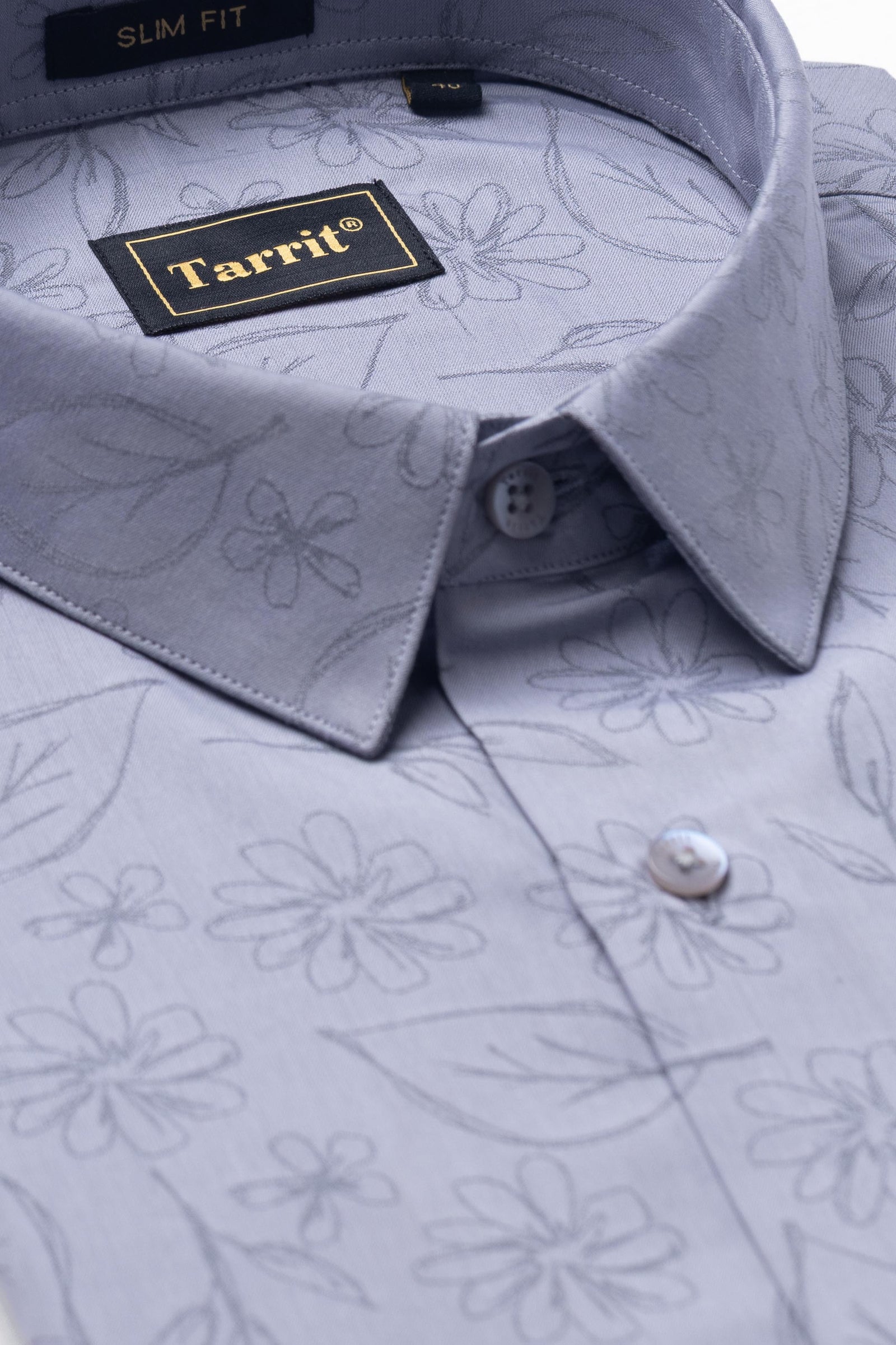
The Tarrit Tencel collection is made from fibre spun through the closed-loop process that recovers the vast majority of its water and solvent — a claim we would rather you verify than take on faith. The shirts run in sizes 38 to 44. If sustainability matters to you, the most useful thing to know is that these shirts are also built to last, because a shirt kept for years is the real sustainable outcome — The Modernist Shirt and The Sentinel Shirt are made for exactly that longevity. And if you would rather a natural fibre with its own low-impact profile, our Egyptian Giza cotton collection sits alongside. Buy less, keep it longer, and choose fabrics whose story you can check — that is the honest version of sustainable dressing, and it is the one we build for.
Frequently Asked Questions
Is Tencel sustainable?
Meaningfully, yes. Its sustainability rests on verifiable facts — a closed-loop process recovering most of its water and solvent, wood from managed forests, and full biodegradability. It is a genuine improvement over most fabrics, though not impact-free.
Is Tencel greenwashing?
No. Greenwashing relies on vague, uncheckable claims; Tencel's rest on specific, measurable facts about its production process and material. That specificity is exactly what distinguishes a real claim from greenwashing.
What makes Tencel eco friendly?
Three things: a closed-loop manufacturing process that recovers around 99.5% of its water and solvent, wood sourced from sustainably managed fast-growing forests, and full biodegradability at end of life.
Is Tencel better for the environment than cotton?
On water use, considerably — its eucalyptus source needs far less than conventional cotton, one of the thirstiest crops. Both are biodegradable, but on resource intensity Tencel has a real advantage.
Is Tencel really eco friendly or just marketing?
Genuinely eco friendly by industry standards, because its claims are specific and verifiable rather than vague. It is not impact-free — it remains an industrial process — but it is a real improvement, not marketing spin.
Is Tencel biodegradable?
Yes. Because it is cellulose derived from wood, it breaks down naturally in soil, unlike petroleum-based synthetics such as polyester, which persist as microplastics.
Real, If You Check It
So is Tencel sustainable, or just marketing? Genuinely sustainable — not because of the word on the label, but because the claims behind it are specific and verifiable in a way greenwashing never is: a measurable closed-loop process, responsibly sourced wood, and real biodegradability. It is not impact-free, and anyone claiming it is deserves your suspicion. But it is a real improvement, especially when you buy it to keep. Explore the Tarrit Tencel collection and check the claims for yourself.