Where can you buy authentic Egyptian cotton shirts online in India?
News
Buying a shirt online removes the one test that actually works. You cannot hold the cloth, tilt it against a light, or feel whether it drapes or holds a boxy shape — and those three seconds in hand tell you more than any product description ever will. So when you buy Egyptian cotton shirts online, you are making a judgement about a seller rather than about a fabric. This is how to make that judgement well, and what separates a listing worth trusting from one that is hoping you will not ask.
Judge the disclosure, not the description. A trustworthy listing names the specific fibre and weave, publishes real measurements, shows unretouched close-ups of the cloth, prices consistently with genuine long-staple cotton, and offers a return policy that survives you actually washing the shirt.
Everything disclosed, nothing implied — see the Tarrit Egyptian Cotton collection.
Key Takeaways
- Online, you are assessing a seller's transparency — not the fabric itself.
- Specific claims beat impressive ones. "Giza cotton" tells you more than "premium".
- A suspiciously low Egyptian cotton shirt price is the clearest single signal.
- Good sellers publish measurements. Weak ones publish adjectives.
- The return window is the real test — buy where you can send it back.
What You're Actually Buying Online
In a shop, the shirt is the evidence. Online, the listing is the evidence, and those are completely different things to evaluate. A product page is a set of claims someone chose to make, arranged alongside photographs someone chose to take. Nothing on it is verified by anyone.
This is why how to buy shirts online is really a question about reading disclosure. A seller who names the fibre, the weave, the fit and the exact measurements is making statements they can be held to — statements a customer could disprove and return the shirt over. A seller who writes "premium quality luxury cotton fabric" has committed to nothing, because none of those words has a fixed meaning. The gap between those two listings is not writing style. It is how much the seller is willing to be accountable for, and that is the most reliable thing you can assess from a screen.
Why Online Shirt Buying Got Harder
Two shifts made this a genuine problem rather than a minor inconvenience. Marketplace listings exploded, and with them a category where the same descriptive words — Egyptian cotton, premium, luxury, imported — sit across a tenfold price range with nothing distinguishing them but the number. A buyer scrolling that page has no mechanism for telling which claims are backed by anything.
The second shift is photography. Product images are now good enough that a mediocre shirt photographs beautifully — colour corrected, steamed, styled, lit to flatter a surface that would look ordinary in daylight. So the two things buyers instinctively rely on, price and pictures, have both been decoupled from quality. Anyone comparing best online shirt brands in India is filtering a category where the surface signals have stopped working, which is why the useful signals are now further down the page.
What a Trustworthy Listing Actually Contains
A specific fibre claim
"Egyptian cotton" describes where cotton was grown, not how good it is — Egypt produces both premium extra-long-staple varieties and ordinary short-staple ones. A listing naming a varietal such as Giza, or stating a yarn count, is making a narrower claim, and narrow claims are harder to make loosely. Vague ones are easy.
Real garment measurements
Not just S, M, L, and not just a collar size. Chest, shoulder, sleeve and body length in inches, per size. A seller who publishes these expects you to check them.
Unretouched fabric close-ups
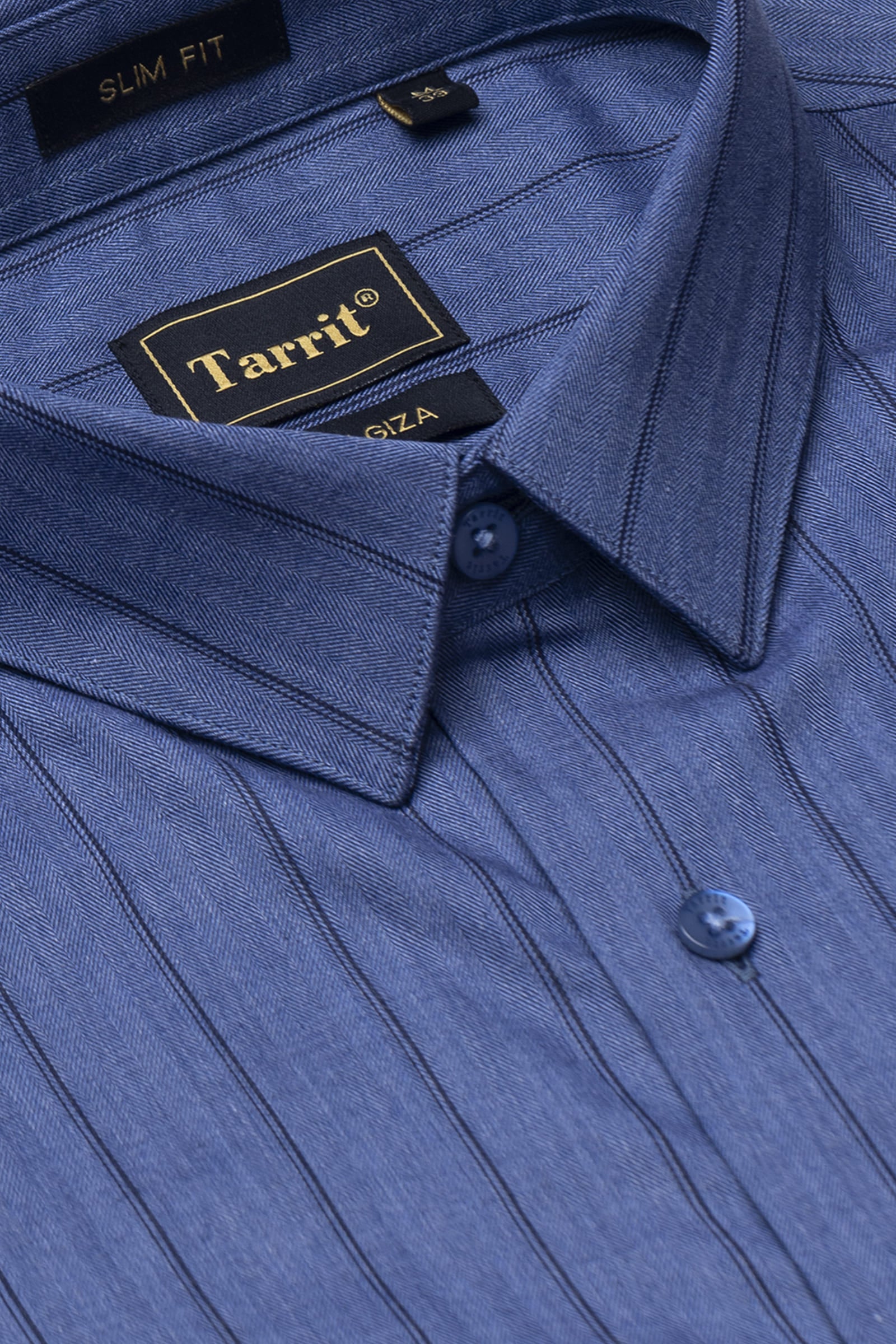
At least one image of the cloth itself at close range, not styled on a model. This is where how do you know if an online shirt listing is genuine gets its clearest answer — a seller confident in the cloth will show it magnified, because magnification reveals surface texture and weave.
A return policy that outlasts the first wash
Most fabric problems appear after washing, not on arrival. A policy generous enough to cover that is a seller expecting the shirt to survive it.
Green Flags and Red Flags
| Signal | Worth trusting | Worth avoiding |
|---|---|---|
| Fibre claim | Named varietal or yarn count | "Premium luxury cotton" |
| Measurements | Full chart, in inches, per size | S / M / L only |
| Photography | Close-ups of the actual cloth | Styled shots only |
| Price | Consistent with long-staple cotton | Far below anything comparable |
| Sourcing | Traceability mentioned openly | Origin asserted, never explained |
| Contact | A person you can ask | A form that goes nowhere |
Questions Buyers Ask Before Checkout
Is it safe to buy premium shirts online?
Is it safe to buy premium shirts online — yes, provided you buy where returns are straightforward and the seller discloses specifics. The risk is not fraud so much as disappointment, and a workable return policy neutralises most of it.
How do you avoid fake Egyptian cotton online?
How to avoid fake Egyptian cotton online: distrust the phrase on its own, look for a varietal name or yarn count, check whether sourcing is explained rather than asserted, and treat an unusually low price as the strongest warning available.
Should you buy from a marketplace or direct from a brand?
Direct, generally. Marketplaces optimise for listing volume and rarely verify fabric claims. A brand selling its own product has more to lose from a bad shirt and usually discloses more.
What if the shirt arrives and feels wrong?
Return it immediately, before washing. Once washed, most policies close — which is exactly why the return window matters more than the description.
How to Assess a Listing in Two Minutes
Seven checks, in order. None takes more than twenty seconds.
- Read the fibre line first, before anything else. If it says only "cotton" or "premium cotton", you have learned nothing and everything below it is decoration.
- Look for a varietal or a yarn count. Giza, a numbered strain, or a count like 80s or 100s. Specific claims are accountable claims.
- Open the measurement chart. If there isn't one, or it only lists S, M and L, the seller does not expect you to check.
- Zoom into the fabric image. You are looking for weave structure and a smooth surface. If every photograph is a styled model shot, ask why the cloth is never shown alone.
- Sanity-check the price. Extra-long-staple cotton costs meaningfully more to grow and spin. A shirt priced like ordinary cotton is made from ordinary cotton.
- Read the return policy properly. How long, what condition, who pays for shipping. This is the clause that protects you when the description does not.
- Message the seller a specific question. Ask what the yarn count is or where the cloth is milled. The speed and precision of the reply tells you almost everything.
What Careful Buying Gets You
The obvious gain is avoiding a bad purchase, but the more durable one is calibration. A man who runs these checks a few times develops a genuine feel for which listings are written by people who understand cloth and which are written by people writing copy, and that instinct transfers to every future purchase across every brand. There is also a practical financial argument: a well-made shirt in genuine long-staple cotton outlasts three ordinary ones, so the higher price is a lower annual cost, and buying authentic Egyptian cotton shirts in India stops being an indulgence once you measure it over years rather than transactions. And there is the smaller, underrated benefit of not thinking about it — a shirt that holds its colour, resists pilling and keeps its shape simply stops requiring attention.
Where Online Buyers Get Caught
The most common mistake is buying on photography, which is now the least reliable signal available given how routinely mediocre cloth is styled, steamed and colour-corrected into looking exceptional. The second is treating a low price as a find rather than as information — fibre has a floor cost, and a shirt priced below it is telling you what it is made of. The third is skipping the measurement chart and ordering by usual size, which fails constantly because sizing conventions differ between brands and there is no shop to correct the mistake in. The fourth is washing a shirt before deciding whether to keep it, which closes almost every return policy in existence. And the fifth is buying from a listing with no way to ask a question, because the ability to get a straight answer from a person is itself a quality signal, and its absence is one too.
What We Tell People Buying Sight-Unseen
In our experience, customers buying online ask far better questions than customers in store, because they know they cannot check anything themselves and they compensate by interrogating the description. What we tell them is straightforward: ask us the specific question, and judge us on whether we answer it.
Anyone can print "Egyptian cotton" on a page — the certification standards are loose and the mislabelling is widespread, which is exactly why we source from mills that participate in full traceability programmes rather than relying on the phrase. That is a claim we can be asked about, and we would rather be asked. The other thing worth saying, because it is the honest version: buy from anyone who discloses properly, us included or not. A seller who names the fibre, publishes real measurements and takes returns after a wash has already told you what you needed to know. Written by the Tarrit styling team.
Two Listings, Same Search Results
Picture two shirts side by side in the same search. Both say Egyptian cotton. The first is a third of the price, has four beautifully styled model images and no close-up of the fabric, lists sizes as S to XXL with no measurements, and describes the cloth as premium luxury imported quality. The second is more expensive, names the fibre and weave, includes one flat magnified image of the cloth, publishes chest and shoulder measurements per size, and says where the fabric is milled. On a phone screen the first looks like better value and the photographs are frankly nicer. But the first listing has committed to nothing you could hold it to, and the second has committed to several things you could check on arrival and return it over. Three months later, one of those shirts has pilled at the underarms. It is not difficult to guess which — and it was guessable before either was bought.
The Test That Still Works at Home
There is one useful thing you can do that online buying does not remove: run the in-hand check the moment the parcel arrives, before you wash anything. Hold the fabric at an angle to a light and look across the surface rather than at it — short-staple cotton shows a faint haze of fibre standing up from the weave, and long-staple cotton does not. Then let the shirt drape over your hand. Good cloth falls; stiff cloth holds a boxy shape, and softness alone means little, since it is routinely applied as a chemical finish that washes out within a few cycles. Those two checks take ten seconds and tell you more than the entire product page did. This is also the honest reason a return window matters so much: it converts an online purchase back into an in-person judgement, which is the only kind that has ever really worked.
Buying From Tarrit
The Tarrit Egyptian Cotton collection runs 34 shirts in sizes 38 to 44, sourced from mills participating in full traceability programmes — which is a claim you are welcome to ask us about directly rather than take on trust. Full measurements are published on the Tarrit Size Guide, fibre details on the Fabrics page, and you can message the team on WhatsApp with a specific question about any shirt before you buy. If you want the most revealing first purchase, The Purist White Shirt hides nothing about surface or weave; The Distinguished Shirt and The Legacy Shirt put the same cloth into daily rotation. And if you would rather not buy online at all, the Tarrit Flagship Store in Tiruppur lets you run the light test yourself.
Frequently Asked Questions
Where can you buy authentic Egyptian cotton shirts online in India?
From sellers who disclose specifics rather than adjectives — a named fibre or yarn count, full measurements, close-up fabric images, explained sourcing, and a return policy that covers the first wash. Buying direct from a brand is generally safer than a marketplace listing.
What should you check before buying a shirt online?
The fibre claim, the measurement chart, a magnified image of the cloth, the price relative to comparable shirts, and the return policy. Then message the seller a specific question and judge the answer.
How do you know if an online shirt listing is genuine?
Specificity. A listing naming a varietal, a yarn count and exact measurements is making claims it can be held to. One relying on words like premium and luxury has committed to nothing.
How do you avoid fake Egyptian cotton online?
Do not treat the phrase alone as meaningful — it describes origin, not quality. Look for a varietal name, check whether sourcing is explained, and treat an unusually low price as the clearest warning available.
Is it safe to buy premium shirts online?
Yes, if returns are straightforward. The main risk is disappointment rather than fraud, and a return window that survives a first wash removes most of it.
Is it better to buy from a marketplace or direct from a brand?
Direct, usually. Marketplaces rarely verify fabric claims, while a brand selling its own product has more at stake and generally discloses more.
Judge the Seller, Then the Shirt
When you buy Egyptian cotton shirts online, you are not really evaluating cloth — you are evaluating how much a seller is prepared to tell you and be held to. Specific claims, real measurements, honest photographs of the fabric, a price that makes sense, and returns that survive a wash. Run those checks and the category stops being a gamble. Explore the Tarrit Egyptian Cotton collection, and ask us anything before you buy.