Where can you buy premium Giza cotton striped shirts for men online in India?
News
Buying a shirt online should be simple, yet most men in India have a drawer with at least one online mistake in it — a size that didn't fit, a fabric that felt nothing like the photos, a "premium" shirt that turned out papery. Learning how to buy shirts online in India the right way is really about removing that guesswork: knowing how to read a size chart, how to judge fabric you can't touch, and how to check a return policy before you pay. Get those three right and online shirt shopping becomes more reliable than the shop floor, not less.
At Tarrit we sell shirts online every day, so we see exactly where buyers go wrong and how easily it's avoided. This guide walks through the checks that turn online shirt buying from a gamble into a confident decision.
To buy shirts online in India confidently, measure a shirt you already own and compare it to the size chart rather than guessing your size, read the product page for fabric type and staple length instead of trusting photos, and always check the return and exchange policy before ordering. These three checks prevent almost every common online shirt mistake.
Prefer to buy from a brand that makes this easy? Explore the Tarrit range — clear fabric details, honest sizing, and shirts built to match their photos.
Key Takeaways
- The core of how to buy shirts online in India is measurement, fabric-reading, and policy-checking — not luck.
- Measure a well-fitting shirt you own and compare to the size chart; never order on your "usual" size alone.
- Judge fabric from the product page — look for staple length and specific fabric names, not vague "premium cotton."
- Check the return, exchange, and COD policy before ordering, especially for fit-sensitive items like shirts.
- A brand that shares detailed fabric and fit information is usually more trustworthy than one that shows only styled photos.
Why Buying Shirts Online Trips So Many People Up
The difficulty with buying any shirt online is that you lose your two most useful tools: your hands and a fitting room. In a store you feel the fabric and try the fit in seconds. Online, you're working from photos and text, which is why how to buy shirts online in India confuses people who shop confidently in person. The information is all there — it's just presented differently, and most buyers never learn to read it.
The good news is that the online product page actually contains more hard information than a shop tag: exact measurements, fabric composition, care instructions, and often close-up imagery. Once you know how to interpret a size chart and a fabric description, you're arguably making a better-informed decision than the shopper squinting at a rack. The skill isn't complicated — it's just different from in-store shopping, and this guide breaks it into the parts that matter.
How Online Shirt Shopping Has Matured in India
Online shopping for menswear in India has shifted from bargain-hunting to considered buying. A few years ago, the instinct was to chase the lowest price and accept the fit lottery. Today, more men are buying directly from brands, reading fabric details closely, and treating a shirt as something to keep rather than replace — which changes what "buying well online" means.
This maturing has raised expectations of the brands too. Detailed size charts, real fabric information, easy exchanges, and clear cash-on-delivery and return terms are becoming the baseline that considered buyers look for. The upside for shoppers is that the tools to buy confidently — measurements, fabric transparency, flexible returns — are more available than ever. You just have to know to use them, which most still don't.
Getting the Fit Right Without a Trying Room
Fit is where most online shirt purchases succeed or fail, and the fix is simpler than people expect. Don't order by your "usual size" — sizing varies widely between brands, so a medium in one is a large in another. Instead, take a shirt you already own that fits you well, lay it flat, and measure four things: chest (armpit to armpit, doubled), shoulder (seam to seam), sleeve length, and full shirt length.
Now compare those numbers against the brand's size chart, which any serious seller publishes. Match to the measurements, not the letter on the label, and you'll get the fit right the vast majority of the time. It's worth knowing the two common fits, too: a slim or tailored fit skims the body, while a regular or classic fit sits looser through the chest and waist. Deciding which you want before you order removes the most common source of online returns entirely.
Reading Fabric Quality From a Product Page
Since you can't feel the cloth, the product description has to do the work — and it reveals a lot when you know what to look for. Vague phrases like "premium cotton" or "soft fabric" tell you almost nothing; specific ones tell you everything. Look for the fabric name and, ideally, the staple length. A page that specifies Giza or Egyptian extra-long-staple cotton, or names a weave like poplin, twill, or oxford, is giving you real, checkable information.
Be especially careful with the word "Egyptian cotton" used alone — it names a country, not a quality, and a lot of ordinary cotton hides behind it. The more precise the fabric detail, the more confidence you can have, because brands cutting corners tend to stay vague. As a concrete rule of thumb, a good shirting fabric is often described in the 100–140 GSM range for lightweight-to-mid-weight shirts; a page that shares this kind of specific is a page that has nothing to hide. Learning to read this detail is the online equivalent of feeling the cloth in your hands.
A Trustworthy Product Page vs a Vague One
| What to look for | Trustworthy Listing | Listing to Be Wary Of |
|---|---|---|
| Fabric detail | Names cotton type, staple, weave | "Premium fabric," nothing specific |
| Size chart | Exact measurements in cm/inches | Only S/M/L, no numbers |
| Imagery | Close-ups of fabric and stitching | Only styled model shots |
| Returns/exchange | Clear, easy-to-find policy | Hidden, vague, or "no returns" |
| Care details | Wash and care instructions given | No care information at all |
Checking Returns, Exchanges, and Payment Before You Pay
This is the step most people skip and later regret. Before placing any shirt order, find the return and exchange policy and actually read it. For fit-sensitive items like shirts, an easy exchange process matters more than almost anything else — it's your safety net if the size isn't quite right. Look for how long the return window is, who bears return shipping, and whether exchanges for a different size are straightforward.
Payment options are worth a glance too. Cash on delivery remains popular across India because it lets you receive the order before paying, which adds a layer of reassurance when buying from a brand for the first time. Prepaid orders sometimes come with small discounts, so it's a genuine choice. The principle is simple: a brand confident in its product makes returns, exchanges, and payment terms easy to find — and reluctance to show them clearly is itself a useful warning sign.
People Also Ask
How do I choose the right shirt size when buying online?
Measure a shirt you already own that fits well — chest, shoulder, sleeve, and length — and compare those numbers to the brand's size chart. Order by the measurements, not by your usual letter size, since sizing varies between brands.
How can I judge fabric quality without touching it?
Read the product page for specific fabric details — the cotton type, staple length, and weave. Precise information like "Giza extra-long-staple cotton" signals quality; vague phrases like "premium fabric" suggest there's little to say.
Is cash on delivery safe for buying shirts online in India?
Yes, and many buyers prefer it because you receive the order before paying. It's especially reassuring when ordering from a brand for the first time. Prepaid orders sometimes carry small discounts as an alternative.
What should I do if the shirt doesn't fit?
Use the exchange policy — which is why you check it before ordering. A good brand offers straightforward size exchanges, so an imperfect first fit is easily corrected rather than a lost purchase.
How to Buy a Shirt Online, Step by Step
- Measure a shirt that fits you. Lay a favourite shirt flat and record chest, shoulder, sleeve, and length.
- Compare to the size chart. Match your measurements to the brand's numbers, not to the S/M/L label.
- Decide the fit you want. Slim/tailored to skim the body, or regular/classic for a looser cut.
- Read the fabric detail. Look for a named cotton, staple length, and weave — not vague "premium" language.
- Study the close-up images. Zoom into fabric, stitching, and collar shots where available.
- Check returns and exchanges. Confirm the window, who pays return shipping, and how size swaps work.
- Choose your payment. COD for reassurance, or prepaid if there's a discount you're comfortable taking.
- Keep the order confirmation. Note the return deadline so an exchange stays easy if needed.
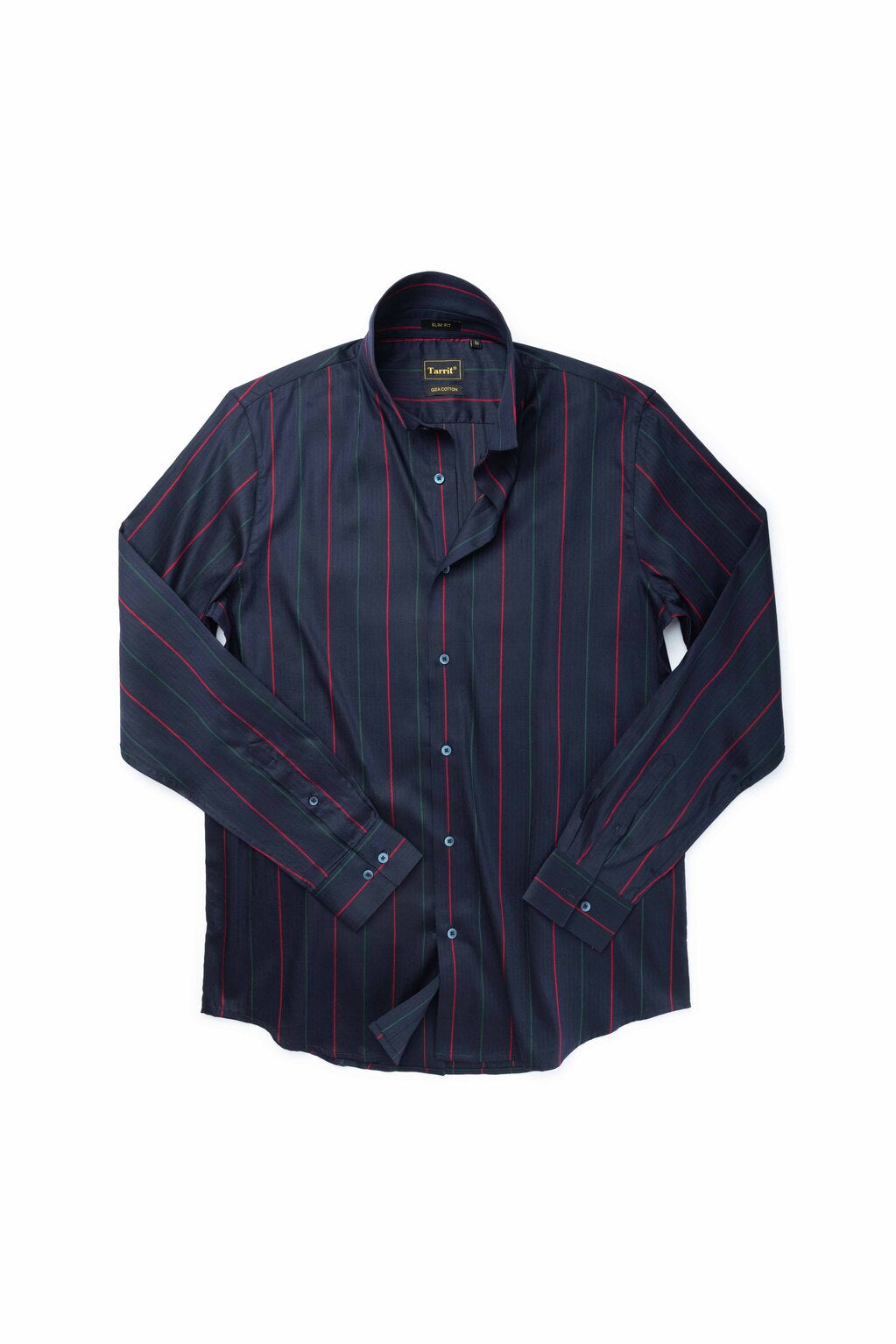
What You Gain by Buying Online the Right Way
Done well, buying shirts online beats the shop floor on almost every count. You get exact measurements instead of a fitting-room guess, detailed fabric information instead of a two-word tag, and the ability to compare options calmly rather than under a salesperson's gaze. The convenience is obvious; the quality of information is the underrated part.
There's also the access advantage. Online, you can buy directly from specialist brands whose shirts you'd never find in a nearby store, often with better fabric and construction than high-street options at similar prices. For anyone building a considered wardrobe, knowing how to buy shirts online in India properly opens up far better choices than shopping locally alone — you're no longer limited to what happens to be on a rack near you.
The Online Shirt-Buying Mistakes to Avoid
The most common mistake is ordering by size letter alone, without checking the chart — the single biggest cause of ill-fitting online purchases. The second is trusting styled photography over fabric detail; a shirt can look wonderful on a model and feel thin in hand, which is why the written description matters more than the imagery.
Buyers also skip the return policy until something goes wrong, then discover exchanges are difficult. And many are swayed by the word "premium" or "Egyptian cotton" with no supporting specifics, paying more for language rather than substance. In our experience, nearly every unhappy online shirt purchase traces back to one of these four shortcuts — and each takes under a minute to avoid.
What We Tell Customers Before They Order
Selling shirts online means we field the same questions constantly, and our advice never changes: measure against the size chart rather than guessing, read the fabric spec closely, and don't hesitate to use the exchange option if the fit isn't perfect first time. We publish full measurements and specific fabric details precisely because we'd want them as buyers ourselves — a shirt described honestly is a shirt returned far less often. Transparency isn't generosity here; it's what makes online buying work for everyone.
Written by the Tarrit styling team — specialists in Giza cotton, linen and Tencel shirting for men who've already decided what they want.
How a Careful Online Order Actually Goes
Picture buying a shirt online the considered way. You take five minutes to measure your best-fitting shirt, note the numbers, and match them to the size chart — landing on the right size with confidence. You read that the fabric is a named extra-long-staple cotton, check the close-up images, and confirm the brand offers easy size exchanges. You order, ideally on cash on delivery for the first purchase. The shirt arrives fitting as expected and feeling as described.
We've found that customers who shop this way rarely return anything — and those who skip the size chart are the ones who most often need an exchange. It's the same lesson every time: the few minutes spent checking before ordering are what make the difference between a shirt you love and a parcel you send back. Careful buying isn't slower shopping; it's shopping that works the first time.
The Signal That Tells You a Brand Is Worth Buying From
Here's the shortcut that cuts through everything: how much a brand is willing to tell you is the clearest sign of how much it has to hide. A seller confident in its shirts publishes exact measurements, names the fabric and its staple length, shows close-up imagery, and makes returns and exchanges easy to find. A seller cutting corners stays vague — styled photos, letter sizes, "premium fabric," and a buried return policy.
So before judging any single product, judge the transparency of the listing itself. Detail signals confidence; vagueness signals the opposite. Once you start reading product pages this way — for what they reveal and what they conveniently omit — you'll consistently buy from the brands worth buying from, and quietly avoid the ones that aren't. It's the most reliable filter there is.
Buy from a page that tells you everything.
Explore the Tarrit range — detailed measurements, named fabrics, and honest close-ups, with easy exchanges if the fit needs adjusting. If you want a versatile first order, the Tarrit Stripes and Tarrit Solids collections are the easiest place to start.
Frequently Asked Questions
How do I find my correct shirt size when shopping online in India?
Measure a shirt that already fits you well — chest, shoulder, sleeve, and length — and compare those measurements to the brand's size chart. Ordering by measurements rather than your usual letter size is the most reliable method.
How can I tell if an online shirt is genuinely good quality?
Read the fabric description for specifics like cotton type, staple length, and weave, and study any close-up images of the fabric and stitching. Precise detail signals quality; vague "premium" language usually doesn't.
What does "Egyptian cotton" really mean on an online listing?
It names a country of origin, not a guaranteed quality level. Look for the more specific Giza grade or a stated staple length, since ordinary cotton can also be labelled simply "Egyptian."
Should I use cash on delivery or pay online for shirts?
Both are fine. Cash on delivery lets you receive the shirt before paying, which reassures first-time buyers, while prepaid orders sometimes carry small discounts. Choose based on your comfort with the brand.
What if the shirt I order doesn't fit properly?
Use the brand's exchange policy, which is why checking it before ordering matters. A good seller makes swapping for a different size straightforward, so an imperfect first fit is easily fixed.
The Bottom Line
Knowing how to buy shirts online in India comes down to three habits: measure against the size chart instead of guessing, read the fabric detail instead of trusting photos, and check the return and exchange policy before you pay. Do these and online shirt shopping becomes more informed and more reliable than buying in a store — with better access to specialist brands and honest fabric than any nearby rack can offer.
Ready to buy with confidence? Explore the Tarrit range, where the measurements, fabric, and policies are all laid out clearly — so the shirt that arrives is the one you expected.