Why are so many shirts labelled Egyptian cotton when they aren't?
News
It starts somewhere you do not look. Under the arms, along the side seams, across the back where a bag strap sits — and by the time you notice, the shirt has a texture it did not have when you bought it. If you have wondered why do shirts pill when you have washed them carefully and worn them normally, the answer has almost nothing to do with how you treated them. It was decided before you owned the shirt, in the length of the fibres the cloth was spun from.
Pilling happens when short fibres work loose from the yarn, tangle at the surface and knot into little balls. Long-staple cotton has fewer loose ends to escape, so it resists pilling. Short-staple cotton has many, so it does not. Washing habits affect the speed. Fibre length decides whether it happens at all.
Long-staple by definition — see the Tarrit Egyptian Cotton collection.
Key Takeaways
- Pills are loose short fibres that have escaped the yarn and knotted together.
- What causes pilling in cotton is staple length — not your washing machine.
- Friction points go first: underarms, side seams, collar, wherever a strap sits.
- Softness at purchase means nothing. Chemical finishing hides short fibre.
- You can slow pilling. You cannot fix a shirt that was always going to.
What a Pill Actually Is
A pill is not damage in the usual sense. It is fibre that was never properly locked into the yarn in the first place, working its way out under friction.
Cotton is spun from fibres of varying length, and every spun yarn has fibre ends. In a short-staple yarn there are enormous numbers of them, because each individual fibre is brief and the yarn needs many of them overlapping to hold together. Those ends sit near the surface. Rub the fabric — against an arm, a chair, a bag strap — and they work loose, protrude, tangle with neighbouring loose ends, and roll into the small dense knots you eventually notice. In long-staple cotton, each fibre travels far further along the yarn before it ends. Fewer ends, fewer escapees, far less to tangle. This is why shirt fabric quality and pilling resistance are the same question asked two ways.
Why This Is More Common Than It Used to Be
Two shifts made pilling a normal experience rather than a defect. The first is that shorter-staple cotton became far more prevalent in mid-market shirting, because it is cheaper to source and, crucially, indistinguishable from good cotton at the point of sale. The second is chemical softening. A shirt can be finished so it feels beautifully soft on a hanger regardless of what it is made from — and that finish washes out over a handful of cycles, taking the illusion with it and leaving the underlying fibre exposed.
The result is a category where the two things a buyer can actually assess in a shop — feel and appearance — have both been decoupled from the property that determines how the shirt ages. So men reasonably conclude they are doing something wrong, and start searching for how to stop shirts from pilling, when the shirt was finished before it was folded.
Where Pilling Starts, and Why There
Under the arms
The highest-friction area on any shirt. Arm against body, hundreds of times a day, often with moisture involved. Why do shirts pill under the arms is really asking why the busiest contact point fails first — it simply gets more rubbing than anywhere else.
Side seams and waist
Where the shirt sits against a belt, a waistband, or a chair back. Constant low-grade abrasion.
Collar and cuffs
Skin contact plus folding plus the most aggressive washing. These also show it most, because they are the parts people look at.
Across the back
Bag straps, car seats, backpacks. A single strap can pill a patch of a shirt that is otherwise pristine.
The pattern is consistent: pilling is a friction map. Where the shirt is rubbed, short fibres surface. Which is exactly why it is not a washing problem — you are not rubbing your underarms in the machine.
Long-Staple vs Short-Staple Cotton
| Long-staple | Short-staple | |
|---|---|---|
| Fibre ends in the yarn | Few | Many |
| Surface | Smooth, low fuzz | Slightly hairy under light |
| After 3 months | Softening | Pilling at friction points |
| After a year | Holds structure and colour | Thinned, flat, fuzzy |
| Softness when new | Genuine | Often a finish that washes out |
Questions Men Ask Once They Notice
Why do my shirts get bobbles?
Why do my shirts get bobbles and pills are the same question — loose short fibres tangling under friction. The word differs by region; the mechanism does not.
Does expensive cotton pill?
Does expensive cotton pill — genuine long-staple cotton resists it strongly but nothing is immune under enough abrasion. What price does not guarantee is fibre length, since an expensive shirt can still be made from ordinary cotton.
Which shirts don't pill?
Which shirts don't pill in practice: long-staple cotton, tightly woven, without heavy surface finishing. Loose weaves and blends with staple fibre tend to be worst.
Can you remove pills permanently?
You can remove the ones present. You cannot stop new ones forming, because the supply of loose fibre is in the cloth itself.
How to Slow Pilling on Shirts You Own
None of this rescues short-staple cotton. All of it buys time.
- Turn shirts inside out before washing. The friction happens against the drum and other garments — put it on the inside surface.
- Wash cold and on a gentle cycle. Heat and agitation both loosen fibre ends faster.
- Do not overload the machine. A packed drum is a friction chamber. Space is the whole point of a wash cycle.
- Separate from towels, denim and anything textured. Rough fabrics abrade smooth ones. This alone makes a visible difference.
- Skip the dryer. Tumbling is sustained high-friction heat — the single most aggressive thing you can do to a shirt.
- Remove pills with a fabric shaver, not a razor. A razor cuts fabric as well as pills. A proper shaver takes the surface without thinning it.
- Rotate your shirts. Wearing the same shirt twice weekly ages it roughly twice as fast as a wardrobe in rotation.
What Men Get Wrong About Pilling
The first and most persistent error is self-blame — assuming the washing machine did it, buying gentler detergent, and changing nothing that matters. The second is the razor: shaving pills with a blade feels efficient and quietly destroys the fabric, because you are cutting the weave as well as the knots. The third is judging cotton by softness in the shop, which is the least reliable signal available given how routinely softness is chemically applied. The fourth is treating pilling as inevitable across all shirts — it is normal in short-staple cotton and genuinely rare in good long-staple cloth, and men who have only owned the former reasonably assume it happens to everything. And the fifth is buying replacements from the same shelf, which reliably produces the same outcome on the same timeline.
What We Tell Customers Who Bring a Pilled Shirt In
In our experience, men who ask about pilling almost always open by apologising for how they have treated the shirt. It is nearly never the reason. When we look at where the pills are — underarms, side seam, a patch across one shoulder blade — the friction map is obvious, and it maps to how they live rather than how they wash. What we tell them is that the shirt was going to do this from the day it was woven, and that the only durable fix is buying cloth with fewer loose ends in it. The other thing we point out, because it is the most useful diagnostic anyone can run at home: hold a shirt at an angle to a light and look across the surface rather than at it. Short-staple cotton shows a faint haze of fibre standing up from the weave. Long-staple cotton does not. That takes two seconds and tells you more than any label. Written by the Tarrit styling team.
Two Shirts, Six Months Apart
Consider two shirts bought the same week and worn in the same rotation. For the first month they behave identically, and if anything the cheaper one feels softer, because it has been finished to. By week six the finish has washed out of it and it feels ordinary. By month three there is a faint roughness under the arms — not visible yet, but you can feel it with a hand. By month six there are visible pills at both underarms, along one side seam, and in a patch across the back where a bag sits. The other shirt has softened noticeably and shows nothing, because there is very little loose fibre available to surface. Same care, same wear, same wardrobe. The difference was decided at the spinning mill, and no amount of gentle washing was ever going to change it.
What Pilling Tells You About the Rest of the Shirt
Pilling is worth paying attention to as a signal rather than just an annoyance, because the same property that produces it produces everything else. Short fibres make weaker yarn, so the cloth thins faster at stress points. They hold dye less evenly, so colour goes flat sooner. They create a slightly rough surface, which is why a shirt that has begun to pill also starts feeling less pleasant against skin. So a shirt showing pills at three months is telling you what the next two years look like — it is not a cosmetic issue that will stabilise. This is also the honest argument for spending more on cotton, and it is narrower than most marketing suggests: you are not buying softness, or a country of origin, or a thread count. You are buying fibre length, and pilling is the most visible everyday consequence of it.
Shirts Built Not to Do This
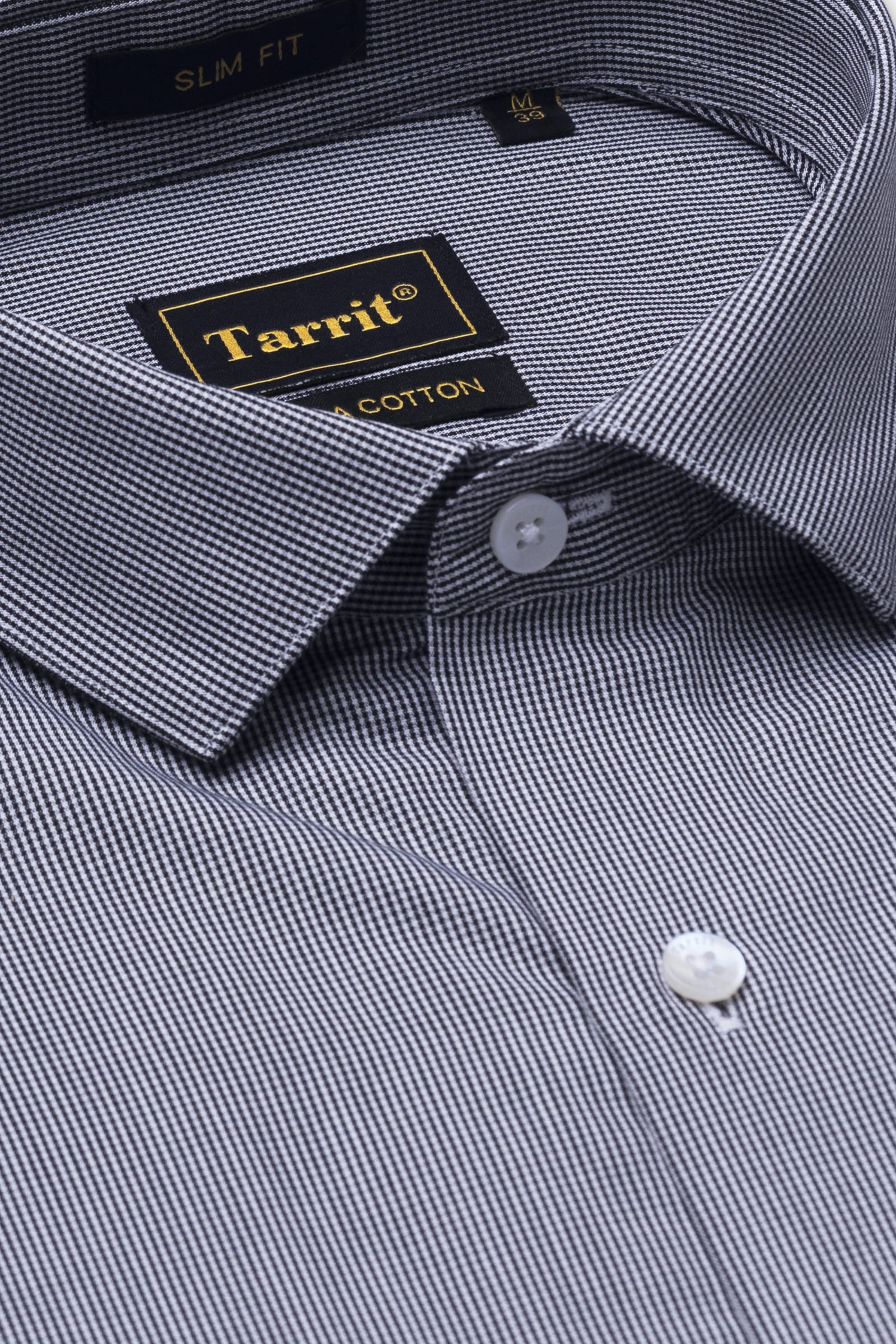
Every shirt in the Tarrit Egyptian Cotton collection is woven from extra-long-staple cotton, which is the entire reason pilling resistance is built in rather than promised. Sizes run 38 to 44 across 34 shirts. If you want to run the light test for yourself, The Purist White Shirt is the most revealing, because white hides nothing about surface texture. The Distinguished Shirt and The Legacy Shirt show the same cloth in daily rotation form, which is where the difference actually accumulates. And whether you buy from us or not, the advice holds: hold the fabric to the light before you buy it, and look for the haze.
Frequently Asked Questions
Why do shirts pill?
Short fibres work loose from the yarn under friction, tangle at the surface, and knot into small balls. Long-staple cotton has far fewer loose fibre ends, so it resists pilling; short-staple cotton has many.
What causes pilling in cotton shirts?
Primarily staple length — how long the individual cotton fibres are. Friction, heat and agitation affect how quickly it appears, but the underlying cause is in the yarn.
How do you stop cotton shirts from pilling?
Wash inside out, cold, on a gentle cycle, without overloading the drum, and separate from towels and denim. Skip the dryer. These slow it considerably but cannot prevent it in short-staple cotton.
Why do shirts pill under the arms first?
Because that is the highest-friction area on the garment — arm against body all day, often with moisture involved. Pilling follows friction, so it appears at contact points first.
Does expensive cotton pill?
Genuine long-staple cotton resists pilling strongly, but price alone does not guarantee fibre length. An expensive shirt made from ordinary cotton will still pill.
Can you remove pills from a shirt permanently?
You can remove existing pills with a fabric shaver, but new ones will keep forming because the loose fibre is in the cloth. Avoid razors — they cut the weave as well as the pills.
It Was Never Your Washing
The next time you notice bobbles under an arm, skip the guilt. Why do shirts pill has a mechanical answer that has nothing to do with detergent: short fibres, loose ends, friction. Good habits buy you time; fibre length decides the outcome. Hold your next shirt up to a light before you buy it and look across the surface — if there is a haze standing up from the weave, you already know how the story ends. Explore the Tarrit Egyptian Cotton collection for cloth with nothing loose in it.