Why are Tencel shirts more expensive than regular cotton shirts?
News
Put a Tencel shirt and a regular cotton shirt side by side and the price gap is obvious. What is not obvious is where that gap comes from. If you are asking why is Tencel expensive compared to a cotton shirt that looks broadly similar on the hanger, the answer is not markup or branding — it is a series of real costs built into the fibre before the shirt is ever cut. This is the breakdown, component by component, of why the number is higher, so you can see exactly what the difference is buying.
Tencel costs more than cotton because the fibre is manufactured, not harvested. It requires wood pulp, an engineered dissolving-and-spinning process, and a closed-loop system that recovers its water and solvent. Each of those adds cost that cotton — picked from a plant — simply does not carry. The price reflects production, not a logo.
See what the price actually buys — the Tarrit Tencel collection.
Key Takeaways
- Cotton is harvested; Tencel is manufactured — that is the root of the price gap.
- Tencel vs cotton price: the difference sits in the fibre, before the shirt is made.
- The closed-loop process that makes it clean also makes it costlier to run.
- Ordinary cotton is cheap partly because its production cuts corners Tencel doesn't.
- Against genuine long-staple cotton, the price gap narrows sharply.
Cotton Is Cheap Because It's Simple
To understand why Tencel costs more, start with why cotton costs so little — because the comparison only makes sense once you see what the cheaper option skips. Cotton is a fibre that grows ready to use. It is picked from the plant, cleaned, spun and woven. The fibre arrives essentially formed by nature, and the supply chain has had a century and more to make every step of it as cheap and high-volume as possible.
That simplicity is genuinely an advantage on price. But it comes with hidden costs that do not show up on the tag: conventional cotton is thirsty, often heavily irrigated, and the cheapest cotton is short-staple fibre that pills and thins quickly. So when people compare Tencel vs cotton price, they are frequently comparing Tencel to the cheapest possible cotton — which is cheap precisely because it is short-fibre and resource-heavy. That is not a like-for-like comparison, and it makes the Tencel premium look larger than it really is.
Where the Tencel Cost Actually Comes From
Tencel's price is not one thing. It is several distinct costs stacked on top of each other, none of which cotton carries.
The raw material must be processed, not just picked
Tencel starts as wood pulp, usually eucalyptus. That wood cannot be spun as-is — it has to be dissolved into a pulp and regenerated into fibre. Cotton skips this entire stage, because the plant produces spinnable fibre directly. This processing step is the first and largest reason what makes Tencel fabric costly has a real answer.
The dissolving-and-spinning process is sophisticated
Turning wood pulp into a smooth, uniform fibre requires an engineered process with organic solvents, precise conditions and specialised equipment. It is closer to advanced manufacturing than to farming, and it is priced accordingly.
The closed-loop system costs money to run
This is the part worth understanding, because it is where cost and quality meet. Tencel is made in a closed-loop process that recovers the overwhelming majority — around 99.5% — of the water and solvent it uses, rather than discharging them. That recovery system is expensive to build and operate. A cheaper fabric skips it and lets the cost fall on the environment instead of the buyer. So part of why does Tencel cost more than cotton is that its price includes something ordinary fabric externalises.
The Price Breakdown, Side by Side
| Cost factor | Regular cotton | Tencel |
|---|---|---|
| Raw fibre | Picked, ready to spin | Wood pulp, must be processed |
| Production | Mature, high-volume, cheap | Engineered, specialised |
| Water & solvent | Often discharged | Recovered in closed loop |
| Fibre quality | Varies; cheapest is short-staple | Consistent, smooth, durable |
| What you pay for | A commodity fibre | A manufactured performance fibre |
Questions Buyers Ask About the Price
Is Tencel more expensive than cotton?
Is Tencel more expensive than cotton — yes, than ordinary cotton, because it is manufactured rather than harvested. But the gap depends heavily on which cotton you compare it to; against cheap short-staple cotton it looks large, against genuine long-staple cotton it is modest.
How much do Tencel shirts cost?
How much do Tencel shirts cost varies by brand and construction, but quality Tencel shirts generally sit in the premium-shirt bracket alongside good cotton rather than far above it. At Tarrit the Tencel shirts run in the same range as the Egyptian cotton collection.
Is Tencel more expensive than polyester?
Yes, considerably. Polyester is petroleum-based and cheap to mass-produce. Part of the point of Tencel is that it delivers the performance people want from synthetics without being one — and that costs more.
Does the price mean it's better?
Not automatically — price is not proof of quality. But in Tencel's case the cost maps to real, testable properties: smoothness, moisture handling and durability. You are paying for something you can feel.
What the Extra Cost Buys You
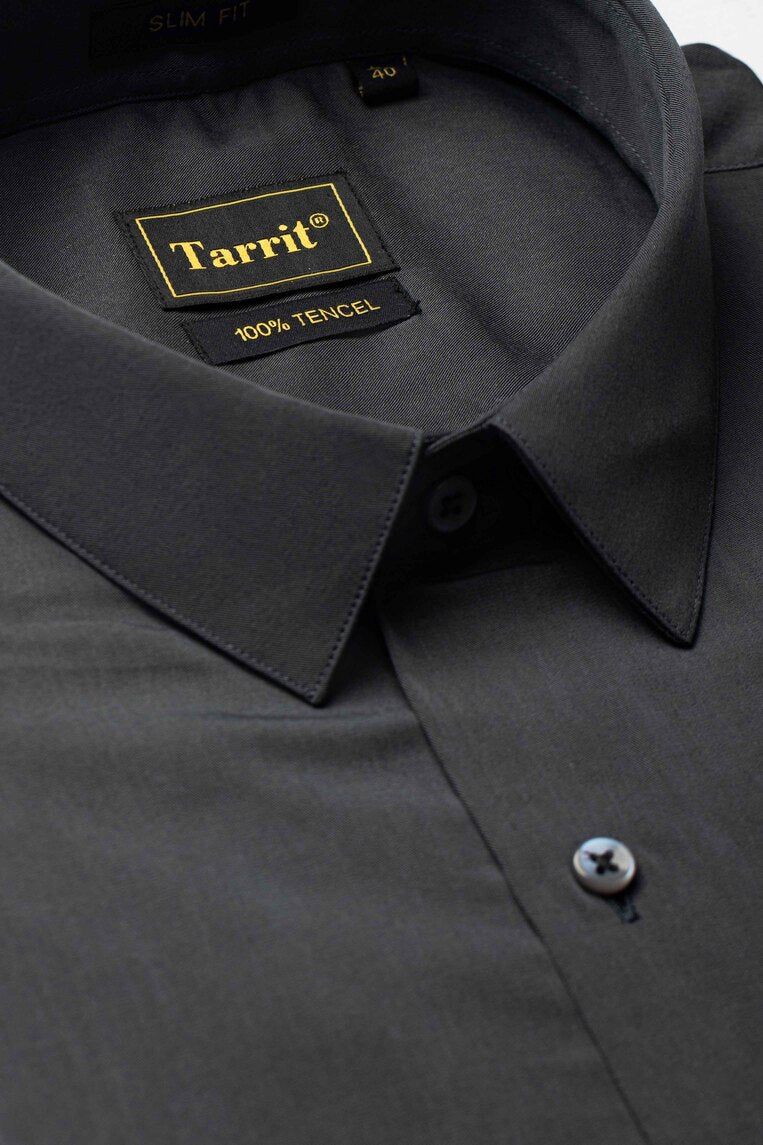
Price on its own is just a number; it only means something once you know what it is attached to. In Tencel's case, the extra cost maps to specific properties. The manufactured fibre is smoother than cotton, which is why it feels different on first wear and drapes rather than sitting stiff. It handles moisture more efficiently, which matters most in heat and humidity. It resists pilling and holds its shape, so it stays in rotation longer than the cheap cotton it is often compared against. And the closed-loop process behind it means the fabric is genuinely, verifiably clean to produce rather than clean by assertion. So the premium is not one benefit — it is a bundle of them, each traceable to a cost in the production chain.
Where Buyers Misread the Price
The most common mistake is comparing Tencel to the cheapest cotton shirt on the rack rather than to a shirt of similar quality, which inflates the apparent premium — the fair comparison is against good long-staple cotton, where the gap is small. The second is assuming a higher price must mean a bigger markup, when in Tencel's case the cost is in the fibre itself before anyone marks anything up.
The third is treating "expensive" as a fixed property, when the same shirt is expensive against polyester and reasonable against premium cotton depending purely on what you hold it next to. The fourth is ignoring durability and judging on upfront price alone, which misses that a longer-lasting shirt costs less over time. And the fifth is assuming all Tencel is priced the same — the fibre sets a floor, but weave, finishing and construction still move the final number.
What We Explain at the Counter
In our experience, the price question comes up almost every time someone picks up a Tencel shirt for the first time, and it is a fair question that deserves a real answer rather than a defensive one. What we tell customers is that the honest way to read the price is to ask what they are comparing it to. Next to a cheap cotton shirt it looks expensive, and it is — but that cheap shirt is cheap for reasons that show up three months later at the underarms. Next to a genuinely good cotton shirt, the Tencel is priced fairly for what the fibre does.
The other thing we point out is that the closed-loop process people sometimes dismiss as a marketing line is a real, expensive piece of infrastructure, and it is part of why the number is what it is. You are not paying for a story. You are paying for a manufacturing process that a cheaper fabric chose not to build. Written by the Tarrit styling team.
The Same Question, Two Shirts
Picture a man comparing two shirts. On the left, a cotton shirt at a price that feels comfortable. On the right, a Tencel shirt that costs noticeably more, and he is trying to work out whether the difference is real or just confidence. If the cotton shirt on the left is cheap short-staple cotton, the honest answer is that the two are not comparable at all — the Tencel will outlast it, stay smoother, and handle a hot day better, and the price gap reflects genuine differences in what he is holding.
If the shirt on the left is a good long-staple cotton shirt, the gap shrinks to something modest, and now it is a real choice between two quality fabrics with different characters rather than a quality-versus-price decision. Either way, the number on the Tencel tag is not arbitrary. It is the sum of a raw material that had to be processed, a sophisticated spinning method, and a clean production system — none of which the cheap shirt paid for, which is exactly why the cheap shirt was cheap.
Why "Expensive" Is the Wrong Frame
There is a more useful way to think about fabric price than expensive versus cheap, and it changes the whole comparison. Price is really a question of what has been included and what has been left out. A cheap cotton shirt has left out fibre quality, longevity and clean production — those costs still exist, they have just been shifted onto you in the form of faster replacement, or onto the environment in the form of discharged water. A Tencel shirt has included them, which is why the number is higher at the till and often lower over the life of the shirt. So why is Tencel expensive is, on closer inspection, slightly the wrong question. The better one is what each price includes — and once you ask it that way, the Tencel premium stops looking like a surcharge and starts looking like the cost of not cutting the corners the cheap shirt cut. That is also why the fabric appeals specifically to men who have stopped buying on upfront price alone.
Seeing the Value at Tarrit
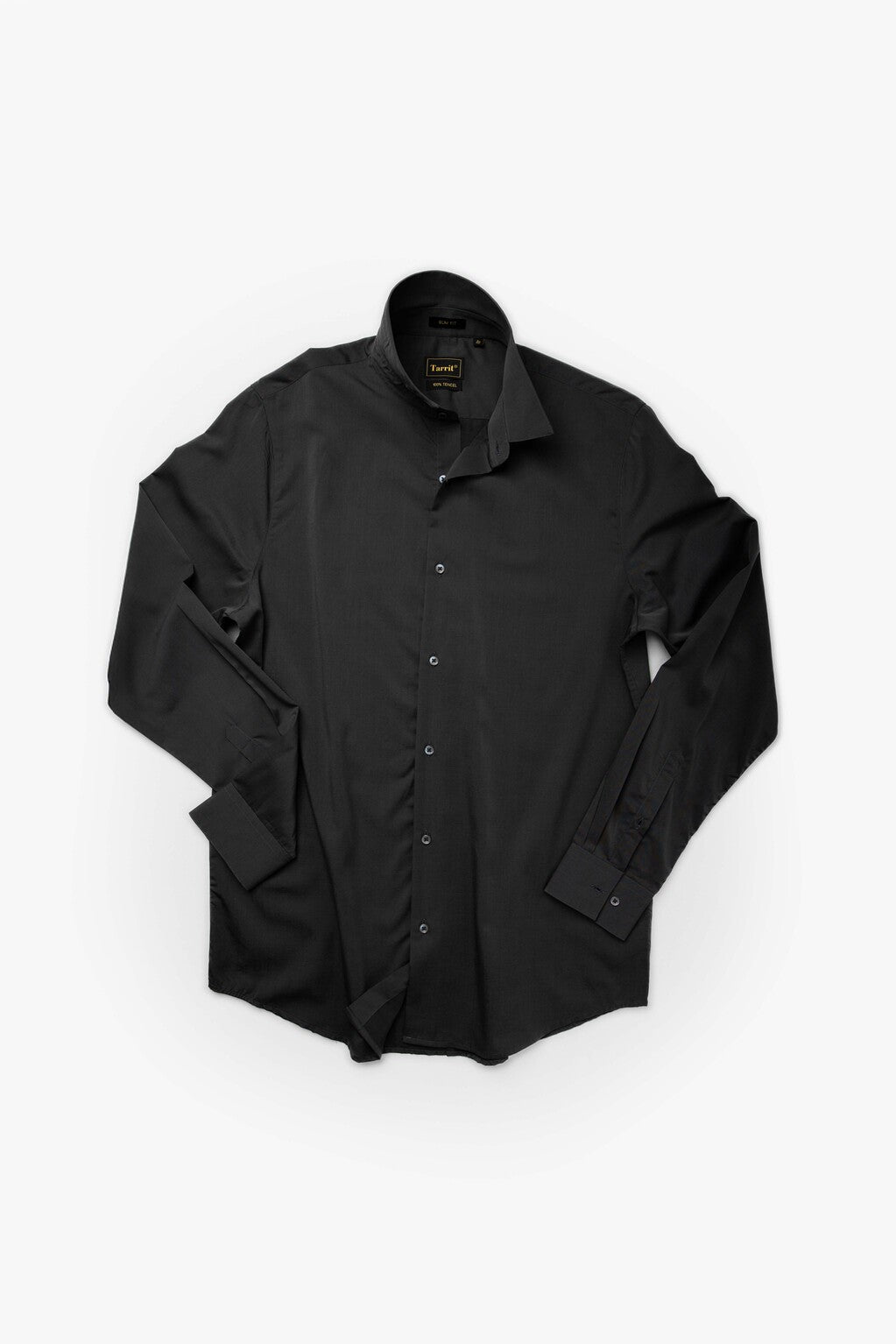
The Tarrit Tencel collection is priced in the same bracket as our Egyptian cotton — the premium-shirt range rather than far above it — in shirts sized 38 to 44. If you want to judge whether the price maps to something real, the honest test is to handle the fabric: The Modernist Shirt and The Sentinel Shirt show what the manufactured fibre feels like against cotton. If you would rather compare it directly to a natural fibre at a similar price, our Egyptian Giza cotton collection sits right beside it — same commitment to what a shirt is made of, different starting material. The point is not that one is expensive and one is cheap; it is that both are priced for what they actually are.
Frequently Asked Questions
Why is Tencel expensive?
Because it is manufactured rather than harvested. Tencel requires wood pulp to be processed and spun through a sophisticated closed-loop system that recovers its water and solvent. Each of those steps adds cost that cotton, picked ready to spin, does not carry.
Why are Tencel shirts more expensive than cotton shirts?
The fibre itself costs more to produce before the shirt is even made. Cotton grows spinnable; Tencel must be dissolved from wood and regenerated into fibre in a specialised, clean process. The premium reflects production, not branding.
Is Tencel more expensive than cotton?
Yes, than ordinary cotton. But the gap depends on which cotton you compare it to — large against cheap short-staple cotton, modest against genuine long-staple cotton of similar quality.
How much do Tencel shirts cost?
It varies by brand and construction, but quality Tencel shirts generally sit in the premium-shirt bracket alongside good cotton rather than far above it.
Why does Tencel cost more than cotton?
Three main reasons: the raw material must be processed rather than picked, the spinning method is sophisticated and specialised, and the closed-loop production system that keeps it clean is expensive to run.
Does a higher price mean Tencel is better?
Not automatically, but in this case the cost maps to real properties — smoothness, moisture handling and durability — that you can feel on the first wear and verify over time.
The Price Has Reasons
So why is Tencel expensive? Because a manufactured fibre carries costs a harvested one does not — processing, sophisticated spinning, and a clean closed-loop system that cheaper fabrics skip. Held against the cheapest cotton it looks costly; held against genuinely good cotton, the gap is small and the fibre does more. The number is not arbitrary, and it is not a markup. It is the price of everything the cheap shirt left out. Explore the Tarrit Tencel collection and see what it buys.