What Is a Comfort Fit Shirt and How Much Room Does It Actually Give?
News
Ask ten menswear brands what is a comfort fit shirt and you will get ten versions of the same non-answer: "a little roomier." That tells a buyer nothing useful. Roomier where? By how much? Enough to fix a straining placket, or enough to look like you borrowed the shirt?
The honest answer is measurable. A comfort fit is not a mood or a marketing word — it is a specific amount of fabric added at specific points on a pattern. Once you know where that fabric goes and roughly how much of it there is, choosing the right shirt stops being guesswork. This guide covers the comfort fit shirt meaning in construction terms, and then answers the question almost nobody addresses: exactly how much room you are actually getting.
A comfort fit shirt is cut with roughly 6 to 8 inches of ease over your actual chest measurement, concentrated at the chest, armhole and upper back. The shoulder seam, cuff and hem stay controlled. That places it between a slim fit (about 2 to 4 inches of ease) and a relaxed fit (8 inches or more).
See how this is drafted in Egyptian Giza cotton across the Tarrit Comfort Fit collection.
Key Takeaways
- "Comfort fit" describes an ease allowance — the fabric added over your body measurement, not the shirt's size label.
- Typical comfort fit ease is around 6 to 8 inches at the chest; slim fit sits near 2 to 4 inches.
- The room is placed at the chest, armhole and upper back — not at the shoulder, cuff or hem.
- Is comfort fit shirt loose? No. Loose means room everywhere. Comfort fit means room in four places and control everywhere else.
- Ease ranges vary by brand, so always read the size chart's garment measurements rather than trusting the fit name.
Comfort Fit, Defined Properly
Every shirt pattern starts from a body measurement and then adds fabric on top of it. That addition is called ease allowance, and it is the single number that separates one fit name from another. A slim fit, a comfort fit and a relaxed fit can all be cut from the same body measurement — what differs is how much ease the pattern maker adds and where it is distributed.
So the comfort fit meaning in shirts is this: a moderate-to-generous ease allowance, applied selectively. The pattern opens through the chest circumference, deepens and widens the armhole, and adds width across the upper back and shoulder blades. It then holds the line at the shoulder seam, keeps the waist lightly shaped rather than straight or heavily tapered, and leaves the cuff and hem at standard width.
That selectivity is the whole design. Add ease everywhere and you have made a relaxed or oversized shirt. Add ease only where the body moves and the shirt stays visually tailored while behaving like a far more forgiving garment. It is a structural decision, not a sizing shortcut — which is why a comfort fit in your true size will always sit better than a slim fit bought one size up.
How Much Room You Are Actually Getting
Here is the part most product pages leave out. When someone asks how much room does a comfort fit shirt give, they want inches, not adjectives.
As a general industry convention in shirting, chest ease breaks down roughly like this: slim and tailored fits sit around 2 to 4 inches over the body chest measurement; classic and comfort fits sit around 6 to 8 inches; relaxed and oversized fits run 8 inches and upward. So if your actual chest measures 40 inches, a comfort fit shirt will typically finish at roughly 46 to 48 inches around the chest.
Two important caveats. First, these are conventions, not standards — there is no regulatory body enforcing fit names, which is precisely why the same label varies between brands. Second, chest ease alone does not define the fit. A shirt can carry 7 inches of chest ease and still bind badly if the armhole is cut high and narrow.
The practical takeaway: treat the fit name as a starting signal, then verify against the brand's garment measurements. Any size chart that lists finished garment measurements lets you calculate the real ease in seconds — subtract your chest from the shirt's chest. That single subtraction tells you more than the fit name ever will.
Why More Men Are Asking This Question Now
Search interest in comfort fit shirt measurements and fit definitions has climbed steadily, and the reason is corrective rather than aspirational.
Through the 2010s, Indian menswear standardised aggressively around slim fit. It became the default across price points, and an entire generation of buyers learned their size inside that cut. What followed was predictable: men who trained, men who aged, and men who simply worked long days discovered the fit did not hold up beyond a few hours. They did not want a fashion change. They wanted the pulling to stop.
The complication is that the correction overshot in places. Oversized and boxy silhouettes arrived at the same time, and "roomier" became a single undifferentiated category in most shoppers' minds. A man who wants his shirt to stop straining at the third button is not asking for a drop-shoulder box cut, but the market frequently offers him one.
That is why the definition question matters commercially, not just academically. Men are trying to establish whether comfort fit is the measured correction they want, or the volume they are trying to avoid. It is the former — and knowing the ease numbers is what makes that verifiable rather than a leap of faith.
Comfort Fit vs Relaxed Fit vs Classic Fit
A frequent question is whether is comfort fit the same as relaxed fit shirt construction. It is not, and the gap between them is wider than the names suggest.
| Attribute | Comfort Fit | Classic / Regular Fit | Relaxed Fit |
|---|---|---|---|
| Typical chest ease | ~6–8 inches | ~5–7 inches | 8 inches and above |
| Where ease is placed | Chest, armhole, upper back | Distributed evenly | Everywhere, including hem |
| Shoulder seam | At natural shoulder | At or just past | Deliberately dropped |
| Waist shaping | Lightly shaped | Straight | None |
| Tucks in cleanly | Yes, by design | Usually | Bunches at the waistband |
| Reads as | Tailored with ease | Neutral, undefined | Casual, voluminous |
Note how close comfort fit and classic fit look on chest ease alone — and how differently they wear. The difference is placement, not quantity. That is the argument for reading construction rather than labels.
Common Questions About Comfort Fit Room
Is a comfort fit shirt loose?
No. It has more room than a slim fit at the chest and armhole, but the shoulder, cuff and hem stay standard. Loose implies room everywhere; comfort fit is targeted.
How many inches bigger is a comfort fit shirt?
Roughly 6 to 8 inches over your body chest measurement as a general convention — about 3 to 4 inches more than a typical slim fit.
Does comfort fit mean a bigger size?
No. The ease is built into the pattern. You take your normal size; the shirt already contains the extra room.
Is comfort fit good for a slim build?
It works if the shirt is tucked. Untucked on a lean frame, the extra chest room can read as shapeless.
Do comfort fit shirts shrink into a slim fit after washing?
Not meaningfully in pre-shrunk cotton. Expect minimal residual shrinkage, not a change of fit category.
Can a comfort fit shirt be altered slimmer?
The waist can be taken in easily. The armhole and shoulder cannot be recut without rebuilding the shirt, so buy the fit you want rather than planning to alter it.
How to Calculate the Real Ease Before You Buy
- Measure your chest. Tape around the fullest part, under the arms, standing relaxed. Do not pull tight.
- Open the brand's size chart. Look for garment measurements, not body measurements. If only body measurements are listed, the chart cannot tell you the ease.
- Find the shirt's finished chest. This is often listed as chest width flat — if so, double it to get circumference.
- Subtract. Finished chest minus your body chest equals the ease allowance.
- Read the result. Around 2 to 4 inches is slim. Around 6 to 8 is comfort. Above 8 is relaxed, whatever the label says.
- Check the shoulder measurement too. If shoulder width is disproportionately large relative to chest ease, the shirt will read oversized regardless of the fit name.
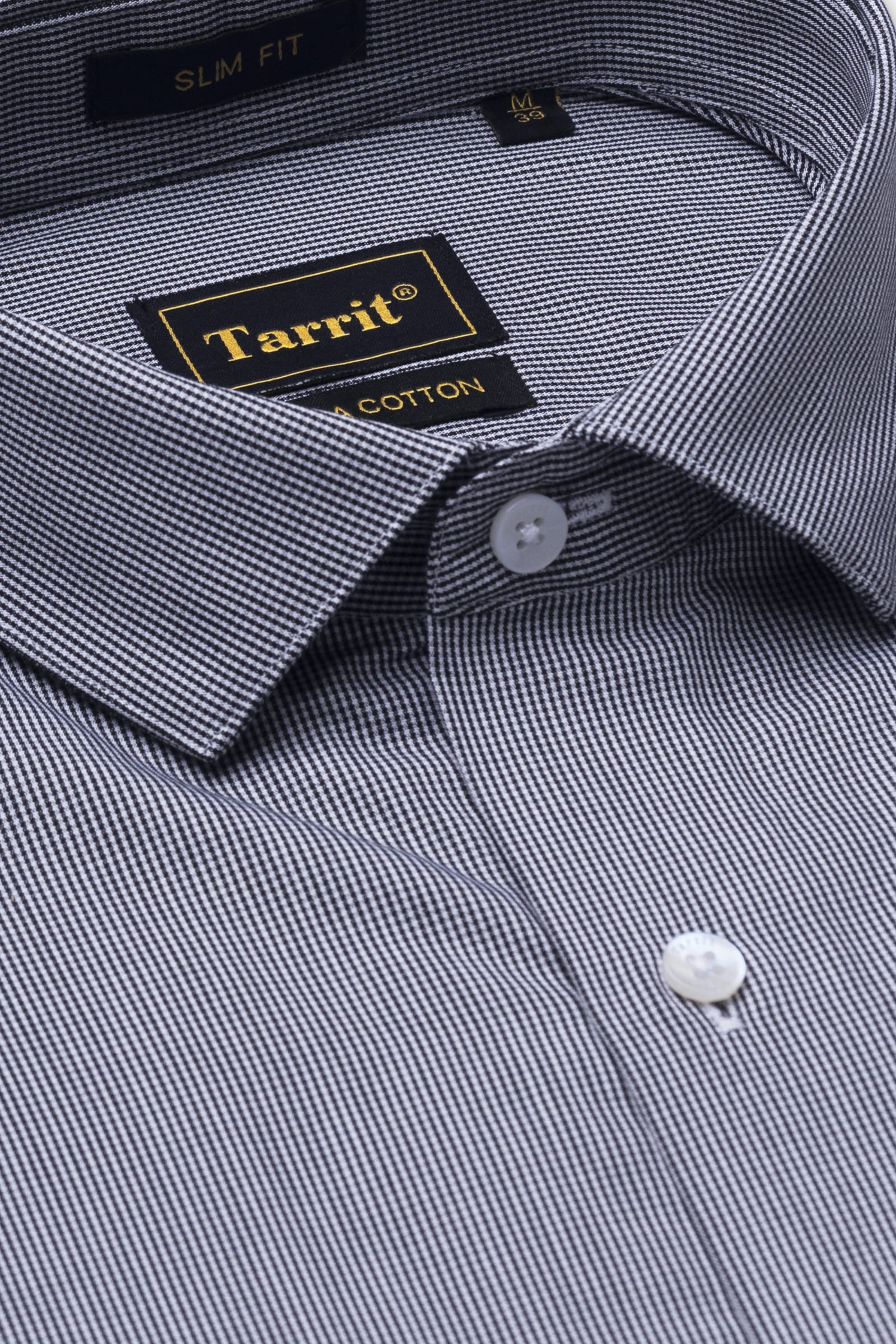
What That Extra Room Buys You
Ease is not comfort for its own sake — it changes how the garment performs across a day.
- No placket strain. Adequate chest ease is what stops the horizontal gap between buttons when you sit.
- Free arm movement. A deeper armhole lets you raise and reach without the shirt body lifting out of your trousers.
- Air circulation. Fabric held off the skin ventilates. In Indian conditions this is the difference between comfortable and damp by midday.
- Reduced seam stress. Shirts fail at points of tension. Less tension means longer service life from the same garment.
- Consistent appearance seated. Most working hours are spent sitting, and a shirt with correct ease does not distort when you do.
Fabric decides whether that ease reads as intentional. A long-staple cotton has enough body to hold the added room in a clean line. A thin or over-softened cloth simply collapses, and the same 7 inches of ease that looks tailored in one fabric looks slack in another.
Where Buyers Get the Room Wrong
Assuming the label is the specification. Fit names are unregulated. One brand's comfort fit is another's regular. The size chart is the only reliable source.
Adding a size on top of the ease. The most frequent error. The room is already drafted in — going up a size gives you a relaxed fit you did not intend to buy.
Judging by chest ease alone. Armhole depth and yoke width determine mobility. Generous chest measurements with a high, tight armhole still bind.
Measuring over a shirt. Taking your chest measurement over clothing inflates the number and pushes you a size up. Measure over a vest or bare skin.
Ignoring the shoulder seam. Ease at the chest is invisible to onlookers. A seam sitting halfway down the upper arm is the first thing anyone sees.
Buying for the mirror, not the day. A shirt evaluated for thirty seconds standing still tells you nothing about hour nine.
Notes From the Tarrit Fitting Room
Written by the Tarrit styling team.
The question we field most often is not "what is comfort fit" but "will it look loose on me." Our answer is always to check three points on the shirt before anything else: where the shoulder seam lands, how deep the armhole is cut, and how the hem behaves when tucked. Chest ease is the number people ask about, but those three details determine whether the ease reads as tailored or careless.
We also encourage buyers to bring their measurements rather than their size. Sizes drift between brands and between seasons; a chest measurement does not. When a customer knows his actual chest and we know the finished garment measurement, the conversation takes two minutes instead of twenty.
On fabric, our consistent guidance for comfort fit is long-staple cotton. We build the Comfort Fit shirts in Egyptian Giza cotton because the fibre length produces a smoother, stronger yarn that holds structure — and in a roomier cut, structure is what keeps ease from becoming sag. The fit and the fibre are one decision, not two.
A Fitting We See Most Weeks
A customer arrives convinced he needs a larger size. He has been wearing slim fit for years, the shirts pull at the chest, and the obvious fix seems to be going up.
We measure him. His chest sits comfortably within his usual size — the problem was never the size, it was the ease. His slim fit shirts carried perhaps three inches of room at the chest and a high armhole to match. Every time he reached forward, the whole shirt travelled with his arm.
Put him in a comfort fit at the same size and both complaints resolve. The chest no longer strains because the ease roughly doubled. The shirt stays tucked because the deeper armhole lets the arm move independently of the body. He has not sized up, so the shoulders still sit correctly and nothing looks borrowed.
What surprises him is that it does not look bigger. It looks cleaner — because a shirt under tension always shows the tension, and removing it removes the distortion.
The Detail That Decides Everything
If you take one thing from this guide, make it this: ease is a distribution problem, not a quantity problem.
Two shirts can carry an identical 7 inches of chest ease and wear nothing alike. Put that ease into the chest and armhole while holding the shoulder, waist and hem, and it reads as a tailored shirt with breathing room. Spread the same 7 inches evenly across the whole garment and it reads as a shirt that does not quite fit.
This is why the industry's fit vocabulary keeps failing buyers. "Comfort," "classic," "relaxed" and "regular" all gesture at quantity while saying nothing about placement — and placement is the entire experience of wearing the shirt. Once you start reading construction rather than labels, the category becomes far easier to navigate, and far harder to be sold the wrong thing in.
Finding Your Comfort Fit at Tarrit
If the ease numbers above describe what you have been missing, the practical starting point is simple:
- Start with a solid. A plain shirt from the Tarrit Comfort Fit collection shows the cut honestly — nothing distracts from how it sits at the chest, shoulder and waist.
- Take your true size. The ease is already in the pattern. Sizing up undoes the design.
- Wear it for a full day before buying a second. Commute, desk, evening. Judge at hour ten.
- Extend once confirmed. With the fit established, move into stripes, checks and prints in the same cut so sizing stays consistent.
Explore the Tarrit Comfort Fit collection in Egyptian Giza cotton.
Frequently Asked Questions
What is a comfort fit shirt?
A shirt cut with a moderate-to-generous ease allowance — typically around 6 to 8 inches over the body chest measurement — placed at the chest, armhole and upper back, while the shoulder seam, cuff and hem remain standard.
How much room does a comfort fit shirt give?
As a general convention, roughly 6 to 8 inches of chest ease, compared with about 2 to 4 inches for a slim fit. Exact figures vary by brand, so check finished garment measurements on the size chart.
Is comfort fit the same as relaxed fit?
No. Relaxed fit carries more ease and distributes it across the whole garment, including a dropped shoulder and wider hem. Comfort fit keeps those controlled.
Should I size up in a comfort fit shirt?
No. The additional room is built into the pattern. Take your usual size; sizing up converts it into a relaxed fit.
How do I know if a comfort fit shirt fits properly?
The shoulder seam should end at your shoulder, you should gather two to three fingers of fabric at the side seam at chest level, and the shirt should stay tucked when you raise your arms.
Is comfort fit suitable for formal wear?
Yes. In a structured long-staple cotton with a firm collar, a comfort fit shirt is entirely appropriate for formal and business settings.
Conclusion
So, what is a comfort fit shirt? It is a shirt carrying roughly 6 to 8 inches of chest ease, placed deliberately at the chest, armhole and upper back, with the shoulder, cuff and hem held to standard. Not loose. Not oversized. Measured.
The reason that definition is worth knowing is that it converts a vague shopping decision into a calculation. Measure your chest, read the finished garment measurement, subtract, and you know exactly what you are buying before it reaches you. Fit names can mislead. Numbers cannot.
Browse the Tarrit Comfort Fit collection and start with one shirt in your true size.