Which Solid Shirts Should You Buy First When Building a Wardrobe?
News
If you're starting a wardrobe from scratch — or clearing out years of impulse buys and rebuilding properly — the first purchase is the one that matters most. Get it right and everything you add later has something to anchor to. So which solid shirt should you buy first? There's a clear, defensible answer, and it isn't about picking a favourite colour. It's about buying in the order that gives you the most usable outfits, the fastest. This guide lays out that order, one shirt at a time, so your money goes where it works hardest.
Buy a crisp white solid shirt first — it's the most formal and most versatile shirt you can own, and it works in every setting from office to evening. Follow it with light blue, then grey or navy. Buy in this order and each shirt adds the most possible outfits.
Key Takeaways
- Buy white first — it's the safest, most versatile single shirt you can own.
- Light blue comes second as your everyday workhorse.
- Your third shirt depends on your life: grey for casual, navy for formal or evening.
- Buy in order of how many outfits each shirt unlocks, not by preference.
- One excellent first shirt beats three average ones bought at once.
Why the First Shirt Sets Up Everything After It
When you own nothing, every shirt you buy has to do two jobs: look good on its own, and pair with whatever comes next. That's why the first purchase isn't a matter of taste — it's a matter of range. The right first shirt is the one that goes with the most trousers and shoes you already own, works across the most occasions, and never looks out of place. In practice, that describes exactly one colour better than any other, which is why the question of which solid shirt to buy first has such a consistent answer.
Think of it as building a foundation. You don't start a house with the feature wall — you start with the part everything else rests on. Your first shirt is that part.
Why Buying Order Beats Buying in Bulk
A few years ago, "building a wardrobe" often meant a single big shop — five or six shirts at once, chosen in an afternoon. In 2026 the smarter approach is sequential: buy one excellent shirt, wear it, learn what you actually reach for, then buy the next. It's slower, but it wastes nothing.
The logic is cost-per-wear. A well-made shirt worn again and again costs very little per outing over its life, while the same spend split across cheaper shirts you're unsure about often ends in hangers full of regret. Buying in order lets each purchase prove itself before the next one, which is why men building a shirt wardrobe from scratch increasingly buy one deliberate piece at a time rather than a rushed set.
The best solid shirt to buy first is white, because it is the most formal and most versatile colour and pairs with every trouser and shoe a man is likely to own. Light blue should be the second purchase, followed by grey or navy depending on whether the wardrobe leans casual or formal.
The Buying Order, Shirt by Shirt
Here's the sequence most men should follow. Buy in this order and you'll have a functioning wardrobe by the third shirt, with each addition multiplying your outfits rather than duplicating them.
Shirt 1: White — buy this first, always
White is the most versatile garment in menswear. It's the most formal shirt colour, it flatters the widest range of skin tones, and it pairs with literally every trouser and shoe you own. Under a blazer it reads sharp; sleeves rolled, it reads relaxed. No other colour covers as much ground from a single purchase, which is exactly what you need when it's the only shirt you have. Spend on quality here above all — cheap white cotton yellows and looks tired fastest, so this is the one shirt where fabric matters most.
Shirt 2: Light blue — the everyday second
Once white is covered, light blue is the natural second buy. It's marginally less formal, easier on the eye in strong daylight, and for many men it becomes the shirt they wear most. Where white handles your sharpest days, light blue handles the everyday ones — which is why owning both early gives you a shirt for essentially any weekday before you've spent on a third.
Shirt 3: Grey or navy — decided by your life
The third purchase is the first one that depends on you. If your days lean casual or creative, buy grey — it bridges formal and relaxed and adds a modern edge that white and blue don't. If your days lean formal, or you dress up in the evenings often, buy navy — it makes an outfit look considered with zero effort and covers dinners and meetings. Either way, this shirt takes you from "two safe shirts" to a wardrobe with genuine range.
Shirts 4 and beyond: depth and accents
After the first three, add a second white or light blue (your most-worn colours, so a spare keeps one always ready), then a warm bone for a softer alternative to white, and finally a single accent like burgundy for evenings.
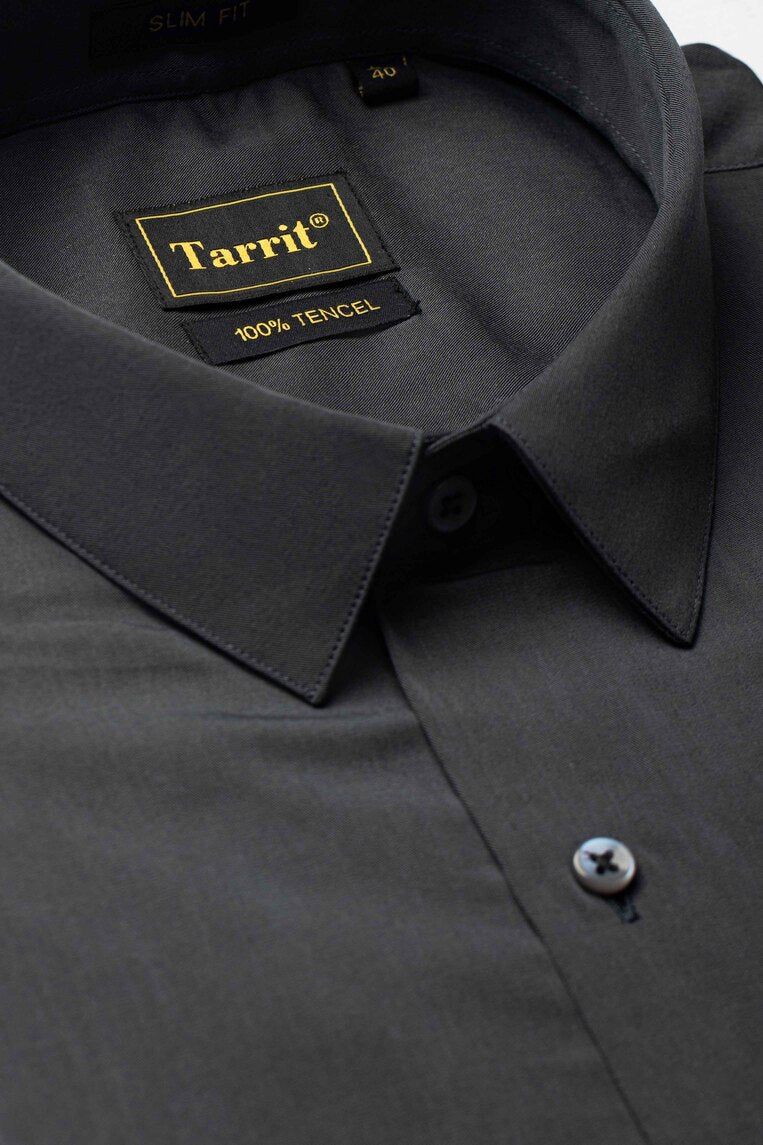
Buy First vs Buy Later — At a Glance
| Order | Shirt | Why now |
|---|---|---|
| 1st | White | Most formal, most versatile — works everywhere from day one. |
| 2nd | Light blue | Everyday workhorse; covers most weekdays. |
| 3rd | Grey or navy | Adds range — grey for casual, navy for formal/evening. |
| 4th+ | Spare white/blue, bone, accent | Depth and variety once the core is set. |
How to Choose Your First Shirt, Step by Step
- Default to white. Unless you have a specific reason not to, white is the correct first buy for almost everyone.
- Check your trousers. White pairs with all of them — charcoal, navy, stone, denim — which is exactly why it's first.
- Prioritise fit at the shoulder. The seam should sit at the edge of your shoulder. Get this right and the shirt looks intentional; get it wrong and no colour saves it.
- Spend on fabric here. Your first shirt is worn most and scrutinised most — long-staple cotton is worth it.
- Wear it for two weeks before buying the next. You'll learn how you actually dress, which sharpens every purchase after.
- Then follow the order. Light blue, then grey or navy, then depth.
What Buying in Order Gives You
- Maximum outfits per purchase. Each shirt unlocks new combinations instead of duplicating old ones.
- No wasted buys. Wearing one shirt before buying the next kills impulse regret.
- A wardrobe that works early. By your third shirt you can dress for most occasions.
- Room to invest. Buying one at a time means you can afford better cloth each time.
- Clarity. A deliberate order removes the paralysis of a big, all-at-once shop.
Where First-Time Buyers Go Wrong
- Starting with a colour or print. Buying olive or a check before a white shirt leaves you with something that pairs with little.
- Buying everything at once. A rushed six-shirt shop usually includes two or three you never wear.
- Choosing by preference, not range. Your favourite colour isn't always your most useful first shirt.
- Skimping on the first shirt. This is the one worn most — cheap cloth shows fastest here.
- Ignoring fit to chase a deal. A poorly fitting bargain shirt is worn once; a well-fitting one is worn weekly.
People Also Ask
What colour shirt should I buy first?
White. It's the most formal and most versatile shirt colour, pairing with every trouser and shoe you're likely to own and working across office, smart-casual and evening settings. It's the safest and most useful single purchase for anyone starting a wardrobe.
Should my first shirt be white or light blue?
Buy white first, light blue second. White is marginally more versatile and more formal, so it covers your sharpest days; light blue is the everyday follow-up. Owning both early gives you a shirt for almost any weekday.
How do I start building a shirt wardrobe from scratch?
Buy one excellent shirt at a time in order of usefulness — white, then light blue, then grey or navy — wearing each before buying the next. This maximises outfits per purchase and avoids the wasted buys of a single big shop.
Is it worth spending more on my first shirt?
Yes. Your first shirt is worn most often and scrutinised most closely, so quality cloth and fit matter more here than anywhere else. A well-made shirt in long-staple cotton looks better and lasts far longer.
What We Tell First-Time Buyers
The question we hear most from men starting out is some version of "where do I even begin?" Our answer never changes: begin with one great white shirt and wear it hard before buying anything else. In our experience, the men who start this way build better wardrobes than those who buy broad on day one — because a fortnight of wearing that first shirt teaches them exactly what they need next.
We've also noticed that first-time buyers consistently underestimate fabric. Someone comparing two white shirts on price alone rarely realises that a long-staple Giza cotton shirt softens with every wash and resists the pilling that makes cheaper white shirts look tired within a season. Spend the extra on shirt one; it's the purchase that earns it most.
Written by the Tarrit styling team.
Building From Zero — A Real Sequence
Here's how the order plays out for someone who owned no shirts a month ago:
- Week 1: Buys one white shirt. Wears it to work formal, and untucked with denim on the weekend. One shirt, two clearly different looks.
- Week 3: Adds light blue. Now has a fresh shirt for most weekdays and can go a full week between washes.
- Week 6: Adds navy (formal-leaning job). Evenings and meetings are now covered — a complete working wardrobe from three deliberate buys.
Three shirts, six weeks, a wardrobe that already works. That's what buying in order buys you.
What Most First-Time Buyers Overlook
The detail that separates a smart first purchase from an average one isn't the colour — it's treating shirt one as an investment rather than a test. Because a solid white shirt hides nothing, its collar roll, cloth weight and fit carry the whole garment, and those are exactly the things cheap shirts cut corners on. Buying the best first shirt for men you can reasonably afford isn't extravagance; it's the highest-return decision in the whole sequence, because it's the shirt you'll wear more than any other. Start well, and every shirt after it has a high standard to match.
Start Your Wardrobe With Tarrit
If you're buying your first shirt, start where the wear is heaviest and the versatility is highest — a crisp white or a soft light blue in Egyptian Giza cotton that softens with every wash.
Frequently Asked Questions
Which solid shirt should I buy first if I mostly dress casually?
Still start with white — it works casually untucked with denim just as well as formally. But you can bring grey forward to your second or third buy instead of navy, since grey suits relaxed dressing better than any other core colour.
How many shirts should I buy to start?
Buy one at a time, but aim to reach three within the first couple of months: white, light blue, and grey or navy. Three deliberate shirts cover most occasions without any wasted purchases.
Can my first shirt be a colour instead of white?
It can, but it's rarely the best choice. A colour or accent pairs with fewer things and covers fewer occasions than white, so starting there leaves gaps. White gives you the most usable outfits from a single first buy.
Does fabric really matter for a first shirt?
More than for any other. Your first shirt is worn most and seen most, so a quality long-staple cotton — smoother, more durable, ageing well — makes a visible difference. It's the one shirt where paying up clearly pays off.
What should I buy after the first three shirts?
Add depth in your most-worn colours first — a spare white or light blue — then a warm bone as a softer white, and finally one accent shade like burgundy for evenings. Build variety only after the core is solid.
Conclusion
The question of which solid shirt to buy first has a reassuringly simple answer: white, then light blue, then grey or navy. Buy in that order and every purchase multiplies your outfits instead of duplicating them, giving you a wardrobe that works by the third shirt. The discipline matters more than the list — buy one excellent shirt, wear it, then buy the next, and spend where it counts most on that all-important first piece.