Woven, Not Printed: What Actually Makes a Shirt a Jacquard? |
News
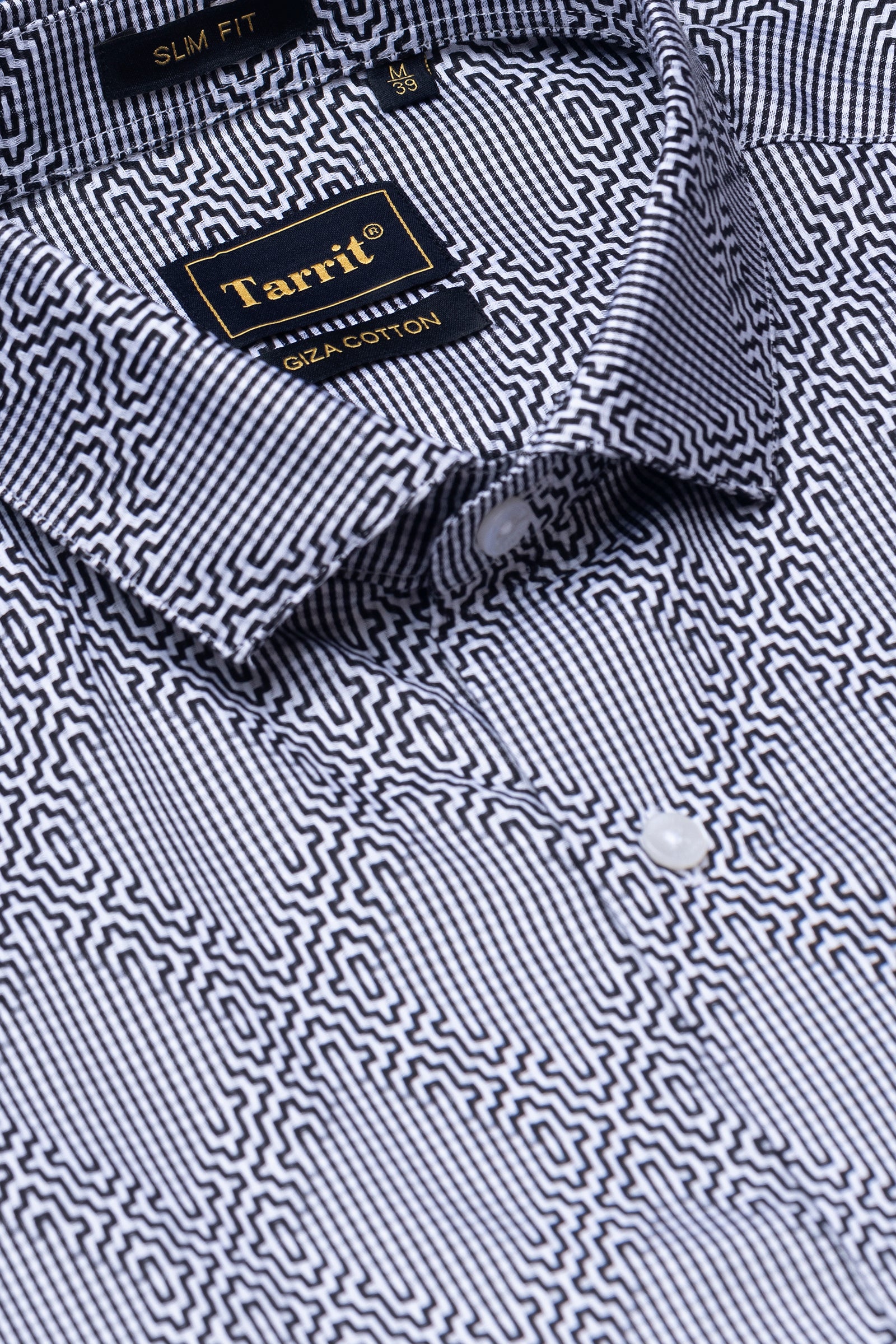
Pick up a jacquard shirt and something feels different — the pattern has texture, depth, a physical presence a printed shirt never has. That's the whole idea: a jacquard is woven, not printed. But what is jacquard fabric really, and how can you tell it apart from a shirt that just has a design stamped on top? At Tarrit, it's the distinction our entire jacquard collection is built on — you feel the difference before you see it.
The confusion is common because, from a distance, a woven motif and a printed one can look similar. Up close and under the fingers, they're worlds apart. Understanding jacquard vs printed shirt is what separates a genuinely premium piece from an ordinary one dressed up with a pattern.
This guide explains what jacquard fabric is, how it's made, how it differs from printing, and how to tell a real jacquard by sight and touch — so you always know what you're actually buying.
What makes a shirt a jacquard? A jacquard shirt has its pattern woven directly into the fabric on a jacquard loom, using different threads to build the design into the cloth itself. A printed shirt has its pattern applied to the surface of plain fabric. The key difference: a jacquard's pattern has raised texture you can feel, while a print is flat and smooth.
What Is Jacquard Fabric?
What is jacquard fabric, precisely? It's fabric woven on a jacquard loom — a loom that controls each thread individually, allowing complex patterns to be built directly into the cloth as it's made. The motif isn't added later; it is the fabric. That's the core jacquard meaning in fabric: the design is structural, formed by the weave itself rather than sitting on the surface. Paisley, geometric, floral and abstract motifs are all created this way.
How Is Jacquard Fabric Made?
How is jacquard fabric made? On a jacquard loom, each warp thread can be raised or lowered independently, thread by thread, to form the pattern as the cloth is woven. This precise control is what lets intricate, repeating motifs emerge directly from the weave. It's slower and more skilled than plain weaving or printing — which is exactly why jacquard feels, and costs, like a premium fabric. The pattern can never crack, fade or peel, because it was never applied on top in the first place.
Jacquard vs Printed Shirts
| Feature | Jacquard (Woven) | Printed |
|---|---|---|
| How it's made | Pattern woven into the cloth | Pattern printed on the surface |
| Texture | Raised — you can feel it | Flat and smooth |
| Back of fabric | Pattern visible in reverse | Usually plain/blank |
| Durability | Won't crack, fade or peel | Print can wear over time |
| Look | Tonal, subtle, dimensional | Flat, often bolder |
Why the Difference Matters
1. Texture You Can Feel
A jacquard's raised weave gives it depth and richness, so the shirt feels premium in the hand — the first sign that answers what does jacquard fabric feel like.
2. It Lasts Longer
Because the pattern is woven in, it never cracks or peels the way surface prints eventually do — the detail is permanent.
3. It Reads as Refined
Woven, tonal motifs look understated and considered, where prints can look flat or loud up close.
4. It Signals Quality
A woven pattern is harder and costlier to make, so is jacquard fabric good for shirts answers itself — it's a mark of a genuinely premium shirt.
5. It's Versatile
The subtle depth of jacquard works across occasions and everyday wear alike, more so than a bold print.
How to Tell If a Shirt Is Jacquard
- Feel the surface — a jacquard has raised texture; a print is smooth and flat.
- Check the reverse — is jacquard woven or printed? On a jacquard the pattern shows through on the back; a print leaves the back plain.
- Look at the edges — woven motifs have clean, thread-formed lines rather than ink edges.
- Tilt it to the light — a jacquard's weave catches light with subtle dimension.
- Read the label — genuine makers state "jacquard" or "woven," not "printed."
Spotting a Real Jacquard: Quick Guide
| Test | Jacquard Shows |
|---|---|
| Touch | Raised, textured pattern |
| Reverse side | Pattern visible in reverse |
| In the light | Dimensional, tonal sheen |
| Pattern edges | Thread-formed, not inked |
| Label | Says woven / jacquard |
Conclusion
So what actually makes a shirt a jacquard? The pattern is woven, not printed — built into the cloth on a jacquard loom, thread by thread, so it has texture you can feel, shows through on the reverse, and never cracks or fades. That's the real difference between woven and printed fabric, and it's why jacquard sits a clear step above an ordinary printed shirt.
Next time you're choosing, trust your fingers before your eyes: feel for the raised weave and check the back. A genuine Tarrit jacquard tells you everything you need to know the moment you touch it — real detail, woven in, never announced.
Frequently Asked Questions
What makes a shirt a jacquard?
Its pattern is woven directly into the fabric on a jacquard loom, rather than printed on the surface — giving a raised, textured design you can feel.
Is jacquard woven or printed?
Woven. The pattern is created by the weave itself, which is why it has texture and usually shows through on the reverse of the fabric.
How can you tell if a shirt is jacquard?
Feel for raised texture, check whether the pattern shows on the back, tilt it to the light for dimension, and read the label — genuine jacquard is described as woven.
What does jacquard fabric feel like?
It feels textured and substantial, with a raised pattern under the fingers, unlike the flat, smooth surface of a printed shirt.
Is jacquard fabric good for shirts?
Yes. It's durable, refined and premium — the woven pattern never cracks or fades, and cotton jacquard stays breathable and comfortable to wear.
Woven, Not Printed: What Actually Makes a Shirt a Jacquard?
Pick up a jacquard shirt and something feels different — the pattern has texture, depth, a physical presence a printed shirt never has. That's the whole idea: a jacquard is woven, not printed. But what is jacquard fabric really, and how can you tell it apart from a shirt that just has a design stamped on top? At Tarrit, it's the distinction our entire jacquard collection is built on — you feel the difference before you see it.
The confusion is common because, from a distance, a woven motif and a printed one can look similar. Up close and under the fingers, they're worlds apart. Understanding jacquard vs printed shirt is what separates a genuinely premium piece from an ordinary one dressed up with a pattern.
This guide explains what jacquard fabric is, how it's made, how it differs from printing, and how to tell a real jacquard by sight and touch — so you always know what you're actually buying.
What makes a shirt a jacquard? A jacquard shirt has its pattern woven directly into the fabric on a jacquard loom, using different threads to build the design into the cloth itself. A printed shirt has its pattern applied to the surface of plain fabric. The key difference: a jacquard's pattern has raised texture you can feel, while a print is flat and smooth.
What Is Jacquard Fabric?
What is jacquard fabric, precisely? It's fabric woven on a jacquard loom — a loom that controls each thread individually, allowing complex patterns to be built directly into the cloth as it's made. The motif isn't added later; it is the fabric. That's the core jacquard meaning in fabric: the design is structural, formed by the weave itself rather than sitting on the surface. Paisley, geometric, floral and abstract motifs are all created this way.
How Is Jacquard Fabric Made?
How is jacquard fabric made? On a jacquard loom, each warp thread can be raised or lowered independently, thread by thread, to form the pattern as the cloth is woven. This precise control is what lets intricate, repeating motifs emerge directly from the weave. It's slower and more skilled than plain weaving or printing — which is exactly why jacquard feels, and costs, like a premium fabric. The pattern can never crack, fade or peel, because it was never applied on top in the first place.
Jacquard vs Printed Shirts
| Feature | Jacquard (Woven) | Printed |
|---|---|---|
| How it's made | Pattern woven into the cloth | Pattern printed on the surface |
| Texture | Raised — you can feel it | Flat and smooth |
| Back of fabric | Pattern visible in reverse | Usually plain/blank |
| Durability | Won't crack, fade or peel | Print can wear over time |
| Look | Tonal, subtle, dimensional | Flat, often bolder |
Why the Difference Matters
1. Texture You Can Feel
A jacquard's raised weave gives it depth and richness, so the shirt feels premium in the hand — the first sign that answers what does jacquard fabric feel like.
2. It Lasts Longer
Because the pattern is woven in, it never cracks or peels the way surface prints eventually do — the detail is permanent.
3. It Reads as Refined
Woven, tonal motifs look understated and considered, where prints can look flat or loud up close.
4. It Signals Quality
A woven pattern is harder and costlier to make, so is jacquard fabric good for shirts answers itself — it's a mark of a genuinely premium shirt.
5. It's Versatile
The subtle depth of jacquard works across occasions and everyday wear alike, more so than a bold print.
How to Tell If a Shirt Is Jacquard
- Feel the surface — a jacquard has raised texture; a print is smooth and flat.
- Check the reverse — is jacquard woven or printed? On a jacquard the pattern shows through on the back; a print leaves the back plain.
- Look at the edges — woven motifs have clean, thread-formed lines rather than ink edges.
- Tilt it to the light — a jacquard's weave catches light with subtle dimension.
- Read the label — genuine makers state "jacquard" or "woven," not "printed."
Spotting a Real Jacquard: Quick Guide
| Test | Jacquard Shows |
|---|---|
| Touch | Raised, textured pattern |
| Reverse side | Pattern visible in reverse |
| In the light | Dimensional, tonal sheen |
| Pattern edges | Thread-formed, not inked |
| Label | Says woven / jacquard |
Conclusion
So what actually makes a shirt a jacquard? The pattern is woven, not printed — built into the cloth on a jacquard loom, thread by thread, so it has texture you can feel, shows through on the reverse, and never cracks or fades. That's the real difference between woven and printed fabric, and it's why jacquard sits a clear step above an ordinary printed shirt.
Next time you're choosing, trust your fingers before your eyes: feel for the raised weave and check the back. A genuine Tarrit jacquard tells you everything you need to know the moment you touch it — real detail, woven in, never announced.
Frequently Asked Questions
What makes a shirt a jacquard?
Its pattern is woven directly into the fabric on a jacquard loom, rather than printed on the surface — giving a raised, textured design you can feel.
Is jacquard woven or printed?
Woven. The pattern is created by the weave itself, which is why it has texture and usually shows through on the reverse of the fabric.
How can you tell if a shirt is jacquard?
Feel for raised texture, check whether the pattern shows on the back, tilt it to the light for dimension, and read the label — genuine jacquard is described as woven.
What does jacquard fabric feel like?
It feels textured and substantial, with a raised pattern under the fingers, unlike the flat, smooth surface of a printed shirt.
Is jacquard fabric good for shirts?
Yes. It's durable, refined and premium — the woven pattern never cracks or fades, and cotton jacquard stays breathable and comfortable to wear.